Your lips can look fuller, uneven or more swollen than expected immediately after lip filler. That does not mean this is how your final result will look.
Swelling is part of the normal early response to treatment, and the appearance of your lips can change noticeably over the first few days. We usually advise patients not to judge their lip shape while this early swelling is still present.
This guide explains the typical lip filler swelling timeline, what you can do during recovery and when we would want you to contact the clinic.
Swelling occurs because the lips have been injected and the tissue responds to that treatment. Each injection causes a small amount of local tissue irritation. Your body’s normal inflammatory response then brings fluid to the area, which can temporarily make the lips feel swollen, tender or tight.
Most lip fillers also contain hyaluronic acid, which interacts with water in the surrounding tissue. This is another reason your lips can look considerably fuller during the first few days than they will once the early recovery period has passed.
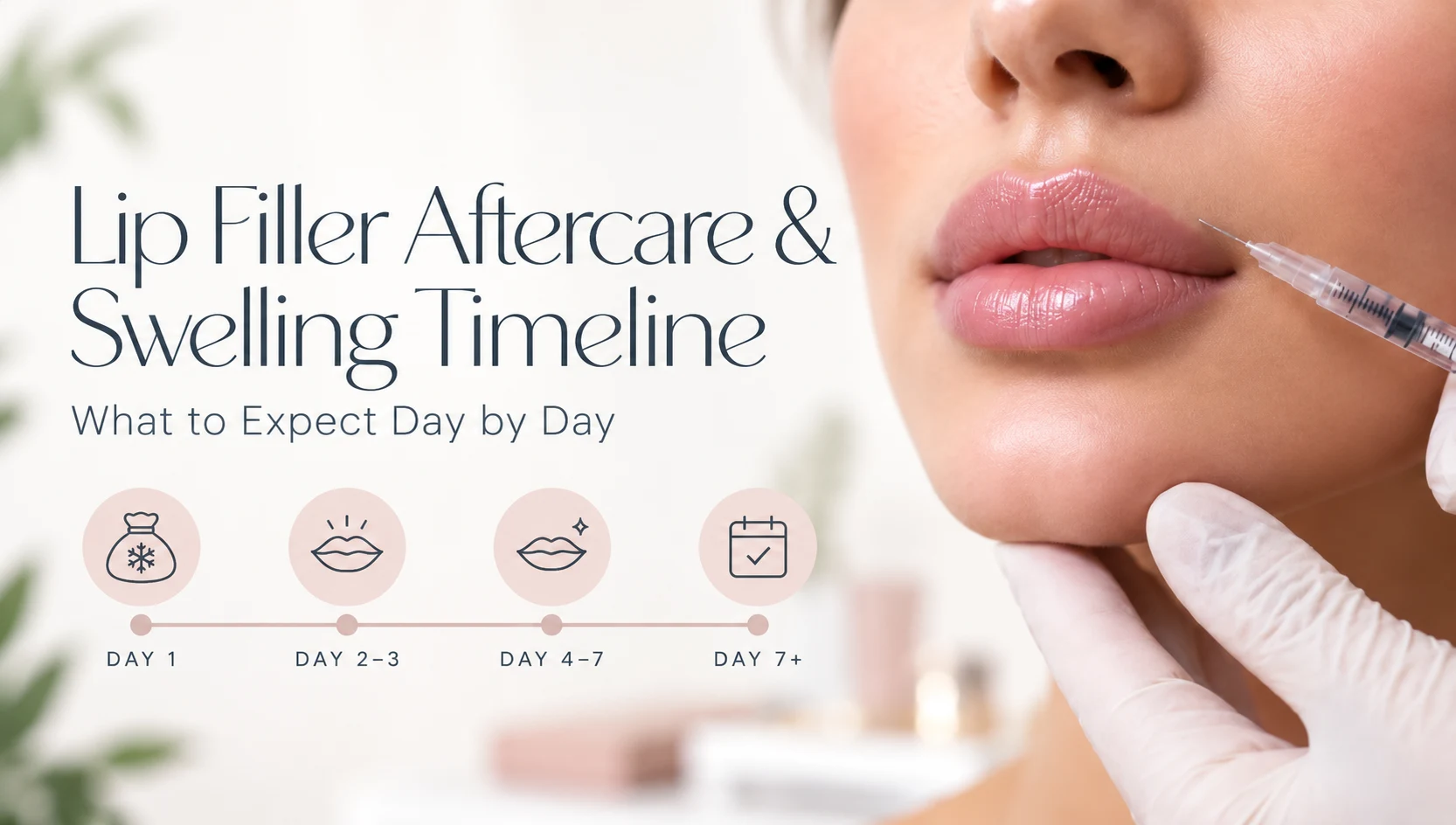
We usually expect the most noticeable swelling during the first 24–48 hours, followed by gradual improvement. Some puffiness can remain for up to a week. This is also consistent with Cleveland Clinic’s guidance on lip filler recovery.
Everyone heals slightly differently, but there is a general pattern we expect to see after lip filler.
Your lips will already look fuller when you leave the clinic because you are seeing both the filler and the beginning of the swelling response.
If this will be your first treatment and you want to understand what happens before reaching the aftercare stage, our First-Time Lip Filler Guide explains the consultation, treatment and what to expect at your first appointment.
The first 24–48 hours are often when patients feel most unsure about their result. Day 2 in particular can look more dramatic than expected, which is why we often remind patients not to decide that they have been overfilled based on how their lips look at this stage.
For that reason, we would not assess your final symmetry or diagnose filler migration during this early stage unless there are other concerning symptoms.
By this stage, we generally want to see an overall trend towards improvement.
Some patients still have noticeable puffiness or unevenness at this point. What matters is that things are gradually improving rather than becoming increasingly swollen or painful.
By the end of the first week, much of the obvious early swelling should be improving.
We would still avoid making decisions about additional filler or dissolving based on very minor differences during this stage.
Once the initial swelling has settled, we can make a much more useful assessment of your result. At this point, it becomes easier to look at your:
Many patients feel comfortable judging their result at around the two-week stage, although some subtle settling can continue beyond this. If we have advised a follow-up appointment, this is usually a much more useful time to discuss whether anything actually needs adjustment.
Temporary asymmetry can happen because both sides of the lips do not always swell in exactly the same way.
One side may bruise more, become more inflamed or simply look puffier than the other during the early recovery period. The side that bruises more can also appear temporarily fuller, which is why we look at the overall recovery trend rather than comparing both sides too closely during the first few days.
If a clear asymmetry remains after the recovery period, we can assess it properly at review.
Recovery is individual, so comparing your Day 3 with another person’s Day 3 is not always helpful.
How much you swell and how quickly it improves can vary depending on your individual response, the amount of filler used, the injection technique, how easily you bruise and whether you have had previous lip treatments.
One patient may feel socially comfortable after a few days while another still has visible puffiness.
We are usually more interested in the direction your recovery is taking than whether you match an exact day-by-day schedule. Swelling that is gradually reducing is very different from swelling that is becoming increasingly painful or severe.
Keep your early aftercare simple and avoid unnecessarily handling your lips.
We generally advise patients to use a gently wrapped cool compress if needed, keep the area clean and avoid rubbing, squeezing or repeatedly checking the lips with their fingers.
Strenuous exercise, excessive heat and alcohol can make swelling or bruising more noticeable during the immediate recovery period, so follow the specific instructions we give you after treatment.
You should also be gentle when eating, drinking and brushing your teeth while the lips are tender. Your individual aftercare instructions should always take priority because they are based on the treatment you actually received.
Yes. A cool compress can help make early swelling and tenderness more comfortable. Wrap the cold pack in a clean cloth rather than applying ice directly to your skin.
Use it gently for short periods without pressing firmly against the lips. The aim is to cool the area, not to massage or reshape the filler.
We usually advise avoiding strenuous exercise during the immediate recovery period. Intense exercise increases blood flow and can make temporary swelling or bruising more noticeable.
Normal light activity is different from a hard gym session, running or hot yoga. Follow the timeframe we give you after your appointment and return to exercise gradually once the early swelling is clearly improving.
Give freshly treated lips a short period without unnecessary products directly over the injection sites. We generally recommend keeping lipstick, lip liner and other lip products off the area during the immediate post-treatment period.
When you start using them again, make sure the products are clean and apply them gently rather than rubbing firmly over the lips. We will tell you how long we want you to wait based on your individual treatment.
For the first day, it is sensible to minimize unnecessary pressure while your lips are swollen and tender. We generally advise avoiding prolonged kissing, repeated puckering or anything else that puts firm pressure on freshly treated lips during the immediate recovery period.
Normal gentle speaking and eating are not something you need to worry about. Follow the individual advice we give you after your treatment.
Do not massage or repeatedly press your lips unless we have specifically advised you to do so.
Early swelling can make one area feel firmer or less even than another, but trying to correct this yourself can irritate already tender tissue.
General dermal filler aftercare guidance from the American Academy of Dermatology also advises avoiding unnecessary touching of treated areas unless your clinician has instructed you to massage them. If you can feel something you are unsure about, contact us rather than repeatedly squeezing or manipulating the area yourself.
Small areas of temporary firmness can sometimes be felt while the lips are swollen and settling.
Not every bump means the filler has been placed incorrectly. Swelling around an injection point, bruised tissue or the filler itself can temporarily create a different texture.
Avoid repeatedly pressing the area to check it. Try not to keep checking the same spot with your fingers or tongue throughout the day. Repeatedly feeling or pressing a small firm area can encourage unnecessary manipulation while the lips are still swollen and settling.
During the first few days, swelling can make the lip border look blurred, uneven or fuller than expected. That does not automatically mean the filler has migrated or needs to be dissolved.
We would avoid making an early decision about dissolving based only on how the lips look during the first few days. Swelling can temporarily create an overfilled, uneven or blurred appearance that may look very different once the area has settled.
If fullness remains above the lip or the border still looks noticeably blurred once the area has settled, our Lip Filler Migration & Dissolving guide explains how migration differs from temporary swelling and when correction may be considered.
Normal swelling should gradually improve. Severe pain, unusual color changes or symptoms that are becoming worse rather than better need assessment.
Contact us promptly if you develop severe or worsening pain, rapidly increasing swelling, spreading redness, unusual warmth, discharge, blistering, fever or white, grey, blue or mottled areas of skin.
Seek urgent medical attention if you experience any change in vision. The FDA’s dermal filler safety guidance also advises immediate medical attention for unusual pain, vision changes or white, grey or blue skin around an injection site.
These symptoms are different from ordinary post-treatment puffiness. Our Lip Filler Risks, Side Effects & Contraindications guide explains filler complications and warning signs in more detail.
Give yourself enough time for swelling and bruising to settle before an important event.
We would not recommend planning lip filler immediately before a wedding, holiday, photoshoot or important work event. Even when treatment goes exactly as planned, everyone swells differently and bruising can be unpredictable.
Allowing roughly two weeks before an important occasion gives the lips much more time to settle and means you are not assessing your result while the tissue is still changing.
When we plan lip filler with you, we also consider what you have coming up after your appointment.
If you have a wedding, holiday, photoshoot or important event coming up in Dubai or abroad, tell us during your consultation. Even when treatment goes smoothly, temporary swelling or bruising can remain visible for several days, so we would rather allow enough settling time than schedule treatment too close to an important date.
At Maris Clinic in Dubai, lip filler treatment and aftercare take place within our DHA-approved clinic, where we have been operating since 2017.
As part of your Lip Fillers in Dubai treatment plan, we explain what to expect during recovery, how to care for your lips and when we would want you to contact us or return for review.
Your lips will usually change the most during the first few days, followed by gradual improvement as the swelling reduces.
Try not to judge your result immediately after treatment or during the first 24–48 hours. Temporary puffiness, mild bruising, firmness and uneven swelling can all affect how your lips look during this period.
Follow the aftercare instructions we provide, give your lips time to settle and contact us if something is becoming worse rather than better. Once the early recovery period has passed, it becomes much easier for both you and us to assess the shape, balance and overall result of your lip filler.
Book a personalized consultation with our medical team and discover the treatments tailored to your skin and lifestyle.