Swelling, tenderness and temporary firmness are common during recovery after liposuction. You may also hear that lymphatic drainage massage is essential after surgery, that you need a certain number of sessions, or that skipping it can cause fibrosis. The reality is more individual.
Manual lymphatic drainage (MLD) may be used to support swelling management and comfort after liposuction, but it is not automatically required for every patient. Whether you should have it, when you can start and how many sessions may be appropriate depend on your procedure, healing progress and your surgeon’s instructions.
Key Takeaways:
Swelling is part of your body’s normal response to surgery.
During liposuction, fat is removed through small incisions using a cannula. The procedure affects the surrounding tissues and can lead to temporary fluid accumulation, bruising and inflammation while the area heals.
That is why treated areas may initially look or feel:
The American Society of Plastic Surgeons notes that swelling is expected during liposuction recovery and that compression garments may be used to minimize swelling and support the body while it heals.
Your appearance during these early stages should therefore not be judged as your final liposuction result.
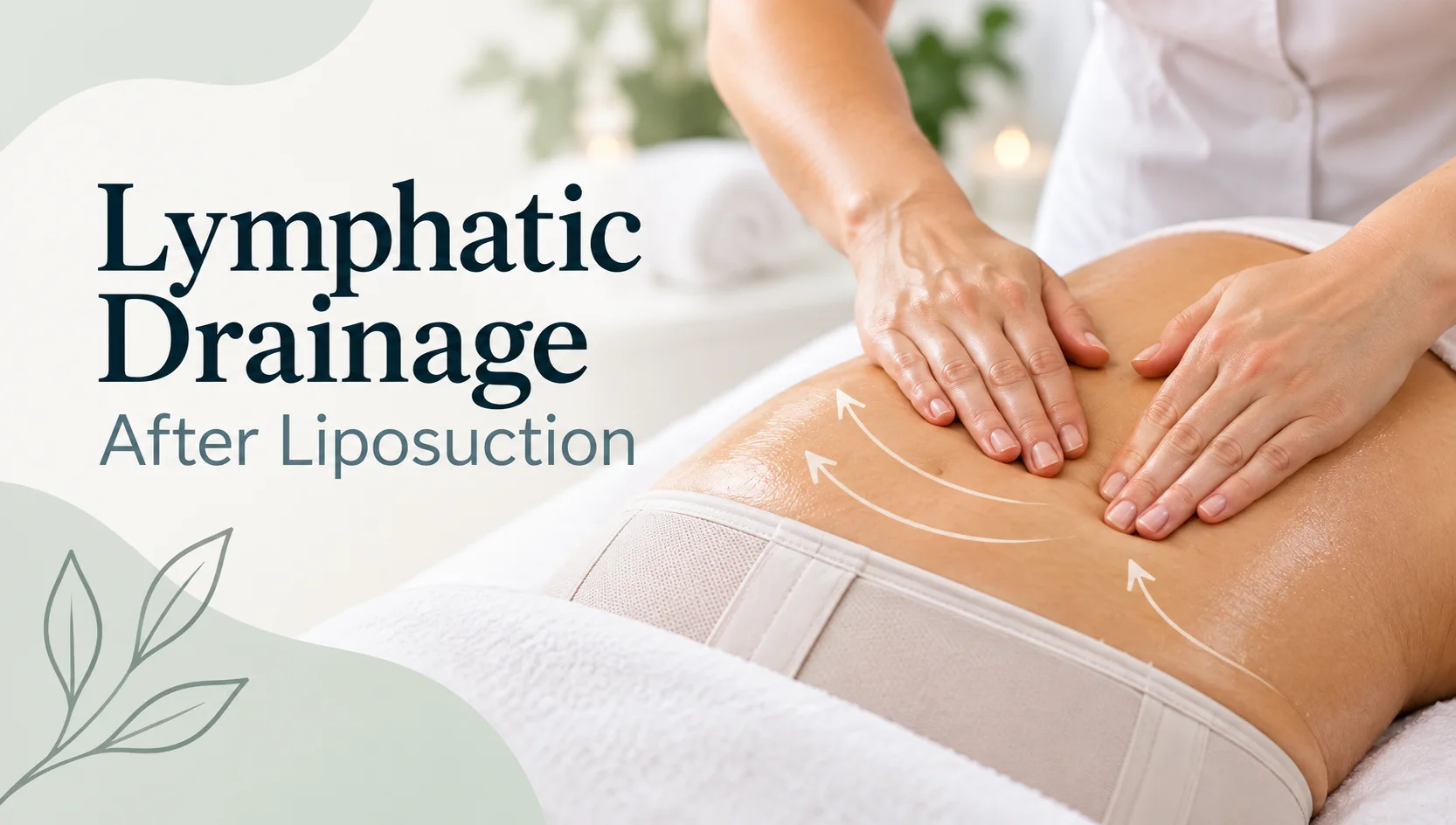
Manual lymphatic drainage uses gentle, directional movements intended to encourage lymph fluid movement through functioning drainage pathways.
After liposuction, it may be included in your recovery plan to help manage:
What it should not be expected to do is equally important.
Lymphatic drainage cannot remove additional fat, correct uneven fat removal, guarantee a smooth contour or treat complications such as an infection or significant fluid collection.
A 2023 review of lymphatic massage following cosmetic procedures discusses potential post-operative applications of MLD but also notes that the evidence is limited and that further research is needed.
No. It is not a universal requirement after liposuction. This is an important distinction because post-operative protocols vary between surgeons.
Some surgeons recommend MLD for selected patients, particularly when swelling or tightness is troublesome. Others manage recovery without routine lymphatic drainage and instead rely on measures such as compression, movement and normal healing.
So, if someone tells you that every liposuction patient must have a fixed course of lymphatic massages to achieve a good result, that is too absolute.
Your surgeon is better placed to decide whether it belongs in your recovery because they know:
Not having lymphatic drainage does not automatically mean your result will be affected.
There is no single post-surgery day on which everyone should start lymphatic drainage.
You may see recommendations online such as “start after three days” or “start within the first week”, but your recovery should determine the timing rather than a generic calendar.
When MLD can begin may depend on:
Starting earlier does not automatically mean better results.
MLD should be gentle. It should not feel like an aggressive deep tissue massage.
Your body may already feel tender after surgery, so some sensitivity around treated areas is understandable. However, strong kneading or forceful pressure should not be confused with manual lymphatic drainage.
You also should not assume that a treatment is working better because it hurts more.
If a session causes sharp pain, feels aggressively deep or leaves you substantially more sore, stop and discuss it with your surgeon or treating clinician.
The difference in pressure and purpose is explained further in our Lymphatic Drainage vs Deep Tissue and Regular Massage guide.
Early firmness or uneven texture does not automatically mean you have fibrosis.
Swelling does not always resolve evenly. As a result, one area can feel softer while another feels firmer, tighter or lumpier.
Healing tissue can also change in texture during recovery.
This distinction matters because patients often hear the word “fibrosis” and assume every hard area after liposuction needs aggressive massage.
It does not.
A persistent lump or firm area may have different causes, including swelling, healing tissue, scar formation, a fluid collection or another post-operative issue.
If an area is becoming larger, increasingly painful or noticeably different rather than gradually improving, it should be assessed by your surgical team rather than simply massaged harder.
MLD should not be presented as a guaranteed way to prevent fibrosis.
Fibrosis involves the development of firm fibrous tissue as part of the healing response. Whether it develops is more complex than whether or not you attended massage sessions.
Research specifically examining MLD after liposuction remains limited, so claims that massage definitely prevents fibrosis go beyond the available evidence.
Be cautious if you are told that:
If firmness persists or worsens, finding out what is causing it is more useful than automatically increasing the pressure of the massage.
There is no standard number that every patient needs.
It is common to see post-operative packages containing 5, 10 or even more sessions. But your recovery should not be determined simply by the size of a package.
If MLD has been recommended, the number of sessions may depend on:
Some patients may benefit from several sessions. Others may need very few or none.
Your progress should be reassessed rather than assuming beforehand that you require a large fixed number.
Missing one session does not mean you will suddenly develop fibrosis or damage your liposuction result.
Your body continues healing between appointments.
If lymphatic drainage is part of your recovery plan, regular sessions may help manage symptoms for some patients. But trying to “make up” for a missed appointment with a longer or more aggressive session is not necessary.
If your swelling or symptoms change significantly, speak to your surgical team instead.
No. Lymphatic drainage and compression do not serve exactly the same role.
Compression garments are commonly prescribed after liposuction to help manage swelling and support tissues while they heal. How long you should wear yours depends on your surgeon’s instructions.
If your recovery plan includes both compression and lymphatic drainage, do not stop or change your compression schedule simply because you are having massage sessions.
Your surgical team’s instructions should take priority.
Some post-liposuction symptoms need medical assessment, not more massage.
Contact your surgeon or surgical team if you develop:
Chest pain, difficulty breathing or sudden severe symptoms require urgent medical attention.
If something in your recovery changes significantly, do not assume that stronger massage is the answer.
In Dubai, post-liposuction lymphatic drainage should be performed by an appropriately licensed professional working within their authorized scope of practice.
A Dubai Health Authority guidance on Manual Lymphatic Drainage issued on 4 June 2025 states that Manual Lymphatic Drainage (MLD) should not be performed by beauty therapists and reminds healthcare facilities that procedures must be carried out by appropriately licensed professionals within their approved scope.
At Maris Aesthetic Clinic, lymphatic drainage is provided within our DHA-approved clinical facility. Your stage of recovery and any instructions from your surgeon can be considered as part of your Lymphatic Drainage Massage in Dubai treatment plan.
Lymphatic drainage may support swelling management and comfort after liposuction, but it is not automatically necessary for every patient.
The timing, number of sessions and whether MLD is appropriate should be based on how you are healing and your surgeon’s guidance. Treatment should remain gentle, and swelling, pain or firmness that is unusual or worsening should be assessed rather than treated with increasingly aggressive pressure.
Book a personalized consultation with our medical team and discover the treatments tailored to your skin and lifestyle.