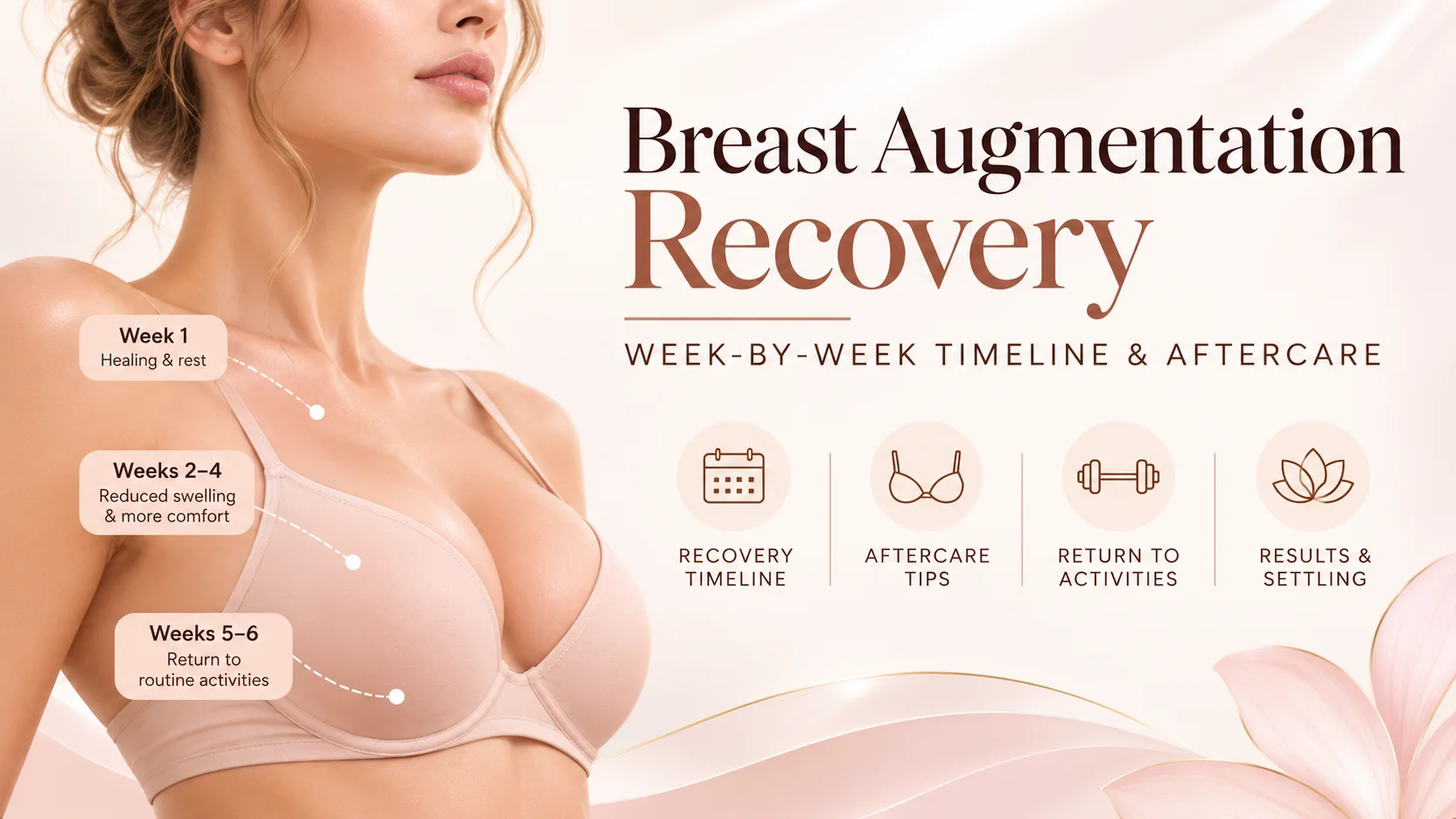
Breast augmentation recovery takes approximately six weeks for most routine activities, although swelling, implant settling, and scar healing can continue for several months. Many patients return to light daily activities within one to two weeks, depending on the surgical technique and individual healing.
Breast implant surgery results in swelling, tightness of the chest, and discomfort in the first few days. These symptoms gradually improve as the tissues heal and the implants begin settling into position.
At Maris Clinic Dubai we understand that recovery is a major consideration when deciding whether breast augmentation is right for you. You need to think about more than just the operation itself when considering your recovery plan, such as your health, lifestyle, work commitments, and the surgical approach being considered.
This guide walks you through the breast augmentation recovery timeline, what factors impact healing, what activities to avoid, and when you can expect your results to settle.
Most patients recover sufficiently to resume many normal activities within four to six weeks after breast augmentation. However, the breasts continue healing and changing in appearance for several months.
Recovery occurs in stages, beginning with postoperative swelling and discomfort, followed by gradual improvements in mobility, breast softness, and implant position.
| Recovery period | What to expect |
|---|---|
| First 24–72 hours | Swelling, bruising, chest tightness and discomfort |
| Week 1 | Gradual improvement in pain, with restricted physical activity |
| Week 2 | Less discomfort and possible return to desk-based work |
| Weeks 3–4 | Improved mobility and further reduction in swelling |
| Weeks 5–6 | Return to many normal activities with surgical clearance |
| Months 3–6 | Continued implant settling and changes in breast shape |
| Months 6–12 | Further scar maturation and subtle tissue changes |
These are general milestones, not guaranteed recovery dates. The American Society of Plastic Surgeons’ recovery guidance highlights the importance of following your surgeon’s individual instructions for postoperative care, support garments and returning to normal activities.
Recovery depends on implant placement, surgical technique, implant size, general health and whether additional procedures are performed. These factors influence postoperative discomfort, swelling, and the time needed before resuming activities.
The main considerations include:
Implant placement: Implants positioned beneath the pectoral muscle may cause more initial muscle soreness than implants placed above it.
Implant size: The size, shape and profile of breast implants can influence tissue adjustment, tightness and discomfort.
Surgical technique: Incision placement, tissue handling and the operative approach affect healing requirements.
Additional procedures: Combining breast augmentation with a breast lift can change incision care and recovery restrictions.
Individual health: Smoking, certain medical conditions and medications may increase the risk of delayed healing.
Aftercare: Following wound-care instructions and activity restrictions supports recovery and helps reduce avoidable complications.
At Maris Clinic, we take these factors into account when planning a breast augmentation treatment. Our consultation approach includes reviewing your medical history, anatomy and desired results alongside the expected recovery requirements.
This helps you understand which activities may need adjusting and what to plan for before undergoing surgery.
The first two to three days are often the most uncomfortable stage of breast augmentation recovery. Swelling, chest pressure, bruising and soreness are common as the body begins healing.
You may notice that your breasts feel firm, appear swollen or sit higher on the chest than expected. During this period:
Take prescribed medication as directed.
Wear the surgical bra or support garment recommended by your surgeon.
Rest between short periods of gentle walking.
Avoid heavy lifting, pushing and pulling.
Sleep in the recommended position to avoid pressure on the breasts.
Arrange transportation home and support during the initial recovery period, especially while recovering from general anaesthesia.
During the first week, discomfort usually begins to improve, although swelling, bruising and chest tightness remain common.
You may feel sore in the chest muscles when you move your arms, especially if the implants were placed under the muscle. You may need help with shopping, housework, childcare and other tasks that require lifting or reaching.
Gentle walking is generally encouraged, but strenuous exercise and heavy lifting remain restricted. Continue following your surgeon’s instructions for surgical bra use, medications, incision care and follow-up appointments.
By the second week many patients can do light daily activities and may be able to return to desk-based work. Swelling and tenderness generally decrease, although internal tissues are still healing.
You may notice:
Less pain and chest tightness.
Improved arm mobility.
Reduced bruising.
Greater comfort while sleeping.
Continued changes in breast firmness and sensitivity.
Feeling better does not mean the implants and surrounding tissues have fully healed. Heavy lifting and strenuous activities may still affect recovery. Your surgeon may also check the incisions and remove non-dissolvable stitches if required.
Weeks 3 & 4: Swelling continues to subside, movement becomes easier and the breasts may begin to feel softer. In some patients, the implants gradually settle down into a more natural position as the tissues around them relax and stretch out.
Mild swelling, firmness, tenderness or temporary changes in nipple sensation can still occur. Daily activities may often be increased gradually but upper body exercises, heavy lifting and high impact exercise need to be approved by your surgeon.
By approximately six weeks, many patients can return to most routine activities, although breast augmentation healing is not necessarily complete.
The initial swelling and discomfort are usually substantially reduced. Your surgeon may approve a gradual return to exercise and other physical activities after assessing your recovery.
The breasts may feel softer and appear more settled but the final appearance can take months to develop. Avoid using the six-week milestone as an automatic indication that all restrictions have ended.
Breast implants often continue settling over several months as swelling resolves and the surrounding tissues relax.
This process is sometimes referred to as drop and fluff and is related to the gradual settling of the implant and softening of the breast. During this stage, you may notice:
A softer breast contour.
A more established implant position.
Further reduction in residual swelling.
Gradual changes in breast symmetry.
Continued improvement in scar appearance.
The final shape depends on the implant, surgical technique, existing breast tissue and individual healing. Scars can continue maturing for 12 months or longer, even after the breasts have settled.
Breast augmentation usually causes soreness, pressure and chest tightness during the first few days. Discomfort generally improves over the first week, although tenderness can persist longer.
The level of pain patients experience varies from person to person and may depend on whether the implants are placed above or below the chest muscle.
Your surgeon may prescribe pain medication to help you with any discomfort. Some patients also experience temporary tingling, numbness or sensitivity around the breasts and nipples as the tissues heal.
You should expect the pain to get better and better, not worse and worse. Sudden or worsening pain, particularly with swelling or redness, requires medical assessment.
Heavy lifting, strenuous exercise and activities that place pressure on the healing breasts should be avoided until your surgeon approves them. Important precautions include:
Heavy lifting: Avoid carrying heavy shopping bags, luggage or children during the early recovery period.
Strenuous exercise: Postpone running, weight training and chest workouts until cleared.
Sleeping on your stomach: Avoid pressure on the breasts while the surgical area is healing.
Smoking and nicotine: Follow cessation advice because nicotine can impair wound healing.
Swimming and soaking: Wait until incisions have healed and your surgeon permits these activities.
Direct sunlight on scars: Protect healing incisions from UV exposure to reduce unwanted pigmentation.
Unapproved treatments: Avoid breast massage, scar products or lymphatic drainage treatments unless recommended by the surgical team.
Your limitations will vary depending on where your incision is made, the location of your implant and other specifics of your procedure.
In the early recovery period after breast augmentation surgery, it is commonly advised to sleep on your back with your upper body slightly elevated.
This position can also help you get more comfortable and relieve pressure on the surgical area. A wedge pillow or supportive pillows may help you maintain the recommended position.
Side sleeping and stomach sleeping should only be resumed when your surgeon says you are healed enough.
A surgical support bra is often recommended for several weeks after breast augmentation, although the exact duration varies.
The bra provides support and helps reduce movement-related discomfort while the tissues heal.
Some surgeons suggest wearing continuously in the early postoperative period, while others use different support protocols. Avoid switching to an underwired bra or going without support until your surgeon confirms that it is appropriate.
Light activities can often resume within one to two weeks, while strenuous exercise and heavy lifting generally require a longer recovery period.
Gentle walkingUsually encouraged soon after surgery
| Activity | General guidance |
|---|---|
| Desk-based work | Often within 1–2 weeks |
| Driving | When medically cleared, off sedating medication and able to drive safely |
| Physically demanding work | May require several weeks |
| Strenuous exercise | Commonly restricted for at least 4–6 weeks |
| Swimming | Once incisions are healed and the surgeon approves |
| Heavy upper-body workouts | Resume gradually after specific surgical clearance |
You should not resume driving until you can safely operate the vehicle, bring it to a stop in an emergency and are comfortable moving without pain or medication restrictions.
The NHS guidance on breast enlargement recovery recommends avoiding driving for at least one week after surgery. However, the exact timing depends on your recovery, medication and your surgeon’s instructions.
Flying after breast augmentation requires individual assessment, particularly for long-haul journeys.
Recent surgery and long periods without moving around can increase your risk of blood clots. Travel plans should therefore account for postoperative reviews, mobility and any complications that may delay departure.
If you are travelling to Dubai for breast augmentation, discuss your intended return flight and length of stay before booking surgery.
Gentle walking is usually encouraged early in recovery, but running, weightlifting and strenuous upper-body activities require more time. Many patients can slowly get back to exercising in about four to six weeks if your surgeon says healing is going well.
Following your postoperative instructions helps protect healing tissues and reduces the risk of avoidable complications. Practical recovery measures include:
Prepare your home. Arrange meals, medication and essential supplies before surgery.
Organize help. Ask someone to assist with childcare, shopping and lifting during early recovery.
Follow medication instructions. Take prescribed medication and avoid unapproved treatments.
Wear your recovery bra. Follow the support garment instructions provided by your surgeon.
Maintain gentle movement. Take short walks as advised without overexerting yourself.
Eat balanced meals. Adequate nutrition and hydration support normal healing.
Attend follow-up appointments. Allow your surgeon to monitor incision healing, swelling and implant position.
Recovery planning is especially important when your work involves physical activity or you have childcare and travel commitments. The Dubai Health Authority’s day surgery standards also address discharge planning, aftercare support and follow-up arrangements.
Increasing pain, sudden swelling, fever, spreading redness or unusual wound discharge require prompt medical assessment after breast augmentation.
Contact your surgical team if you notice:
Sudden or significant swelling in one breast.
Pain that becomes more severe instead of improving.
Fever, chills or increasing redness.
Bleeding or unusual discharge from an incision.
Wound separation or delayed healing.
A sudden change in breast shape or increasing firmness with pain.
Sudden chest pain, difficulty breathing or fainting require emergency medical care. New one-sided leg swelling or calf pain also warrants urgent assessment.
Recognizing these symptoms is important because complications such as infection, haematoma or fluid accumulation can require timely treatment.
Many patients take one to two weeks off desk-based work. Jobs involving lifting, prolonged physical activity or repetitive upper-body movements may require a longer recovery period.
When you can shower depends on your incision dressings and your surgeon’s instructions. “Some patients can shower after a few days, some need to wait longer. Avoid soaking incisions until they have healed.
You may be able to go braless once your surgeon confirms that sufficient healing has occurred. A surgical or supportive bra is commonly recommended during the first several weeks.
Yes. Implants can initially appear high, firm or swollen. Their position and softness often change over several months as swelling decreases and the tissues adjust.
Mild differences in swelling and implant settling can occur during recovery. However, sudden or increasing asymmetry should be assessed rather than assumed to be normal.
Most noticeable swelling improves during the first several weeks. Residual swelling can persist for months, particularly while the implants and surrounding tissues continue adjusting.
Yes. Temporary changes in breast or nipple sensation can occur after surgery. Sensation may improve over time, although some changes can persist or become permanent.
Breast appearance often becomes more established over three to six months as swelling decreases and the implants settle. Subtle tissue and scar changes may continue beyond this period.
Yes. Implants placed beneath the chest muscle may cause more initial muscle discomfort than those positioned above it. Recovery also depends on the surgical technique, implant dimensions and individual healing.
Recovery after breast augmentation is an important part of the process, so you have to plan ahead of the surgery itself. Time away from work, support at home, physical activity and travel can all influence when treatment is most practical for you.
At Maris Clinic, your journey to breast augmentation in Dubai starts with an assessment of your anatomy, medical history and your goals for the treatment. Recovery expectations are part of this discussion, alongside implant selection, surgical options and potential risks.
We want you to know the process and what your recovery will look like before you make a treatment decision.
Book a breast augmentation consultation at Maris Clinic in Jumeirah 1, Dubai, to discuss your options, expected recovery and individual treatment plan.
Book a personalized consultation with our medical team and discover the treatments tailored to your skin and lifestyle.