Lip filler and a lip flip can both make the upper lip look more noticeable, which is why patients considering non-surgical lip enhancement in Dubai often compare the two.
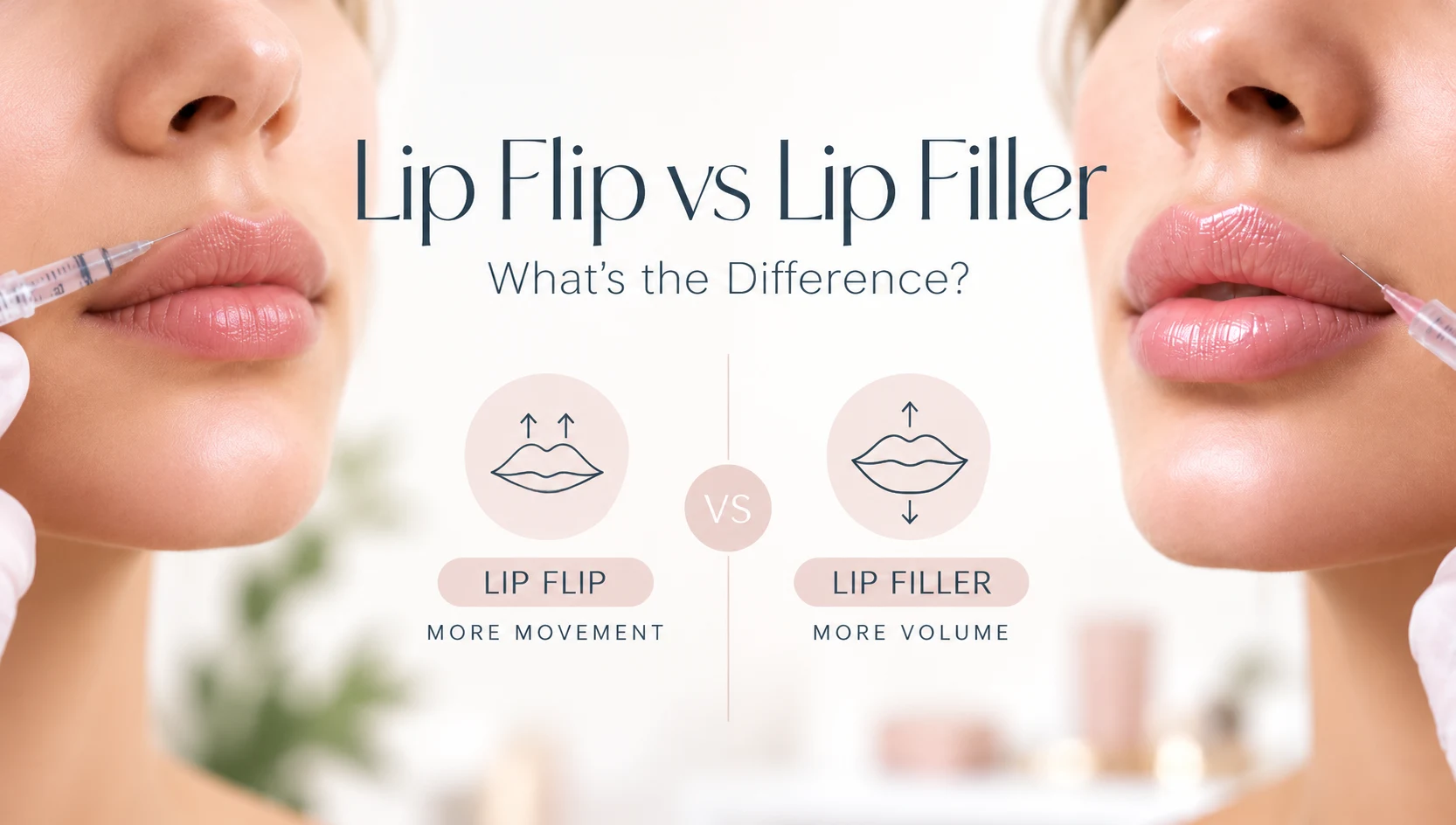
But they do not achieve that change in the same way. Lip filler adds physical volume to the lips. A lip flip changes how the existing upper lip moves.
Understanding that difference is more useful than simply asking which treatment gives a “fuller” result. The right option depends on what your lips look like at rest, what happens when you smile and what you actually want to change.
A 2025 review found that interest in both lip filler and lip flip increased between 2014 and 2024, although lip filler remained the more frequently searched treatment.
A lip flip changes movement, while lip filler changes volume and structure.
During a lip flip, a small amount of botulinum toxin is injected around selected points of the upper lip. This temporarily relaxes part of the muscle responsible for lip movement, allowing the upper lip to turn slightly outward and making more of the existing pink lip visible.
Nothing is added inside the lip itself. Lip filler works differently. Injectable filler, commonly made with hyaluronic acid, is placed into selected areas of the lips to create physical volume, alter shape or improve definition.
This means filler can change how the lips look even when your face is completely relaxed, while a lip flip becomes particularly relevant when the concern is related to how the upper lip moves.
| Lip Flip | Lip Filler | |
|---|---|---|
| Adds physical lip volume? | No | Yes |
| Main effect | Changes upper-lip movement | Adds volume, shape or definition |
| Particularly relevant when | Upper lip curls inward or becomes less visible when smiling | Lips lack volume, shape or definition |
| Upper or lower lip | Mainly affects the upper lip | Can treat upper lip, lower lip or both |
| Degree of change | Usually subtle | Can range from subtle to more noticeable |
| When results appear | Develop gradually over several days | Volume is visible immediately but initially affected by swelling |
| Duration | Usually a few months | Generally lasts longer than a lip flip |
| Immediately reversible? | No | HA filler can sometimes be dissolved |
| Can affect mouth movement? | Temporarily, in some patients | Does not intentionally weaken lip muscle |
| Can they be combined? | Sometimes | Sometimes |
No. A lip flip makes more of your existing upper lip visible rather than adding new volume. This distinction is easy to miss in before-and-after photographs.
When part of the upper-lip muscle is relaxed, the lip can turn slightly outward. That can create the appearance of greater fullness, particularly when smiling.
But the amount of lip tissue has not increased. This is why a lip flip can work well for someone who already has enough upper-lip volume but loses visibility of that lip during movement.
It may be much less noticeable for someone whose upper lip is genuinely thin even when their face is relaxed.
If your upper lip looks reasonably full at rest but curls inward or becomes much less visible when you smile, muscle movement may be contributing to the concern.
In that situation, a lip flip may be worth discussing because it addresses the way the upper lip moves rather than simply adding more volume. A useful way to assess this is to compare your lips in two situations:
At rest: How much upper-lip tissue is naturally visible?
While smiling: Does that tissue remain visible, or does much of the upper lip roll inward?
If your upper lip becomes significantly less visible only when you smile, adding more filler does not necessarily address the movement responsible for that change.
However, if the upper lip is also naturally thin at rest, relaxing the muscle cannot create volume that is not already there. That is where filler may be more appropriate.
If your main concern is lack of volume while your face is relaxed, lip filler is generally more relevant than a lip flip. Filler can be placed strategically to address concerns such as:
The FDA recognizes increasing lip fullness as an approved use for certain dermal fillers in adults aged 22 and older. The amount and placement still need to be tailored to your anatomy. Wanting more lip volume does not automatically mean that more filler is always better.
Either treatment can look natural when it addresses the right concern.
A lip flip is often described as the “more natural” option because it does not add physical volume. But that does not automatically make it more suitable. If your lips already have enough volume but the upper lip rolls inward when you smile, a subtle change in movement may be all that is needed.
If your lips genuinely lack volume, a lip flip may create very little visible improvement. In that situation, a conservative amount of appropriately placed filler may actually produce the more balanced result.
The same principle works in the other direction. Adding filler to a lip that already has adequate volume but retracts strongly during smiling may make the lip larger without correcting the movement that bothered you in the first place.
For us, a natural result is less about choosing one procedure over another and more about matching the treatment to your anatomy.
It can help in selected cases, but a gummy smile should not automatically be treated as a standard lip flip.
A gummy smile simply describes visible gum exposure when you smile. There can be different reasons for this, including the way specific upper-lip muscles move.
Botulinum toxin can be used to reduce excessive gingival display caused by muscle hyperactivity, but the muscles and injection points used may differ from those used for a straightforward cosmetic lip flip.
A 2024 systematic review of 13 prospective controlled trials found that botulinum toxin treatment for gummy smile commonly involved muscles including the levator labii superioris alaeque nasi, levator labii superioris and zygomaticus minor, with treatment adapted according to the pattern and severity of gum exposure.
So if visible gum is your main concern, we would first assess why your upper lip is lifting rather than assuming a standard lip flip is automatically the right treatment.
It can temporarily affect certain mouth movements because the treatment deliberately relaxes muscle around the upper lip.
Most patients considering a lip flip are focused on how their lips will look. It is equally important to think about what the lips do. The orbicularis oris muscle contributes to actions such as forming a seal around the mouth, pursing the lips and articulating certain sounds.
If the muscle is relaxed more than intended, you may temporarily notice that:
A published comparison of lip filler and lip flip specifically identifies difficulty with pronunciation, straws, spitting, whistling and eating from a spoon as possible effects of excessive orbicularis oris weakness.
This is one reason a lip flip should not be viewed simply as the “easier” alternative to filler. It changes muscle function, even though the aesthetic effect itself may be subtle.
For some people, even a small temporary change in lip control matters more than it would for others. Tell us during consultation if your work or activities depend heavily on precise mouth movement. This may be particularly relevant for:
This does not automatically mean you cannot have a lip flip. It simply means that the possible functional effect deserves more consideration when deciding whether the cosmetic benefit is worthwhile for you.
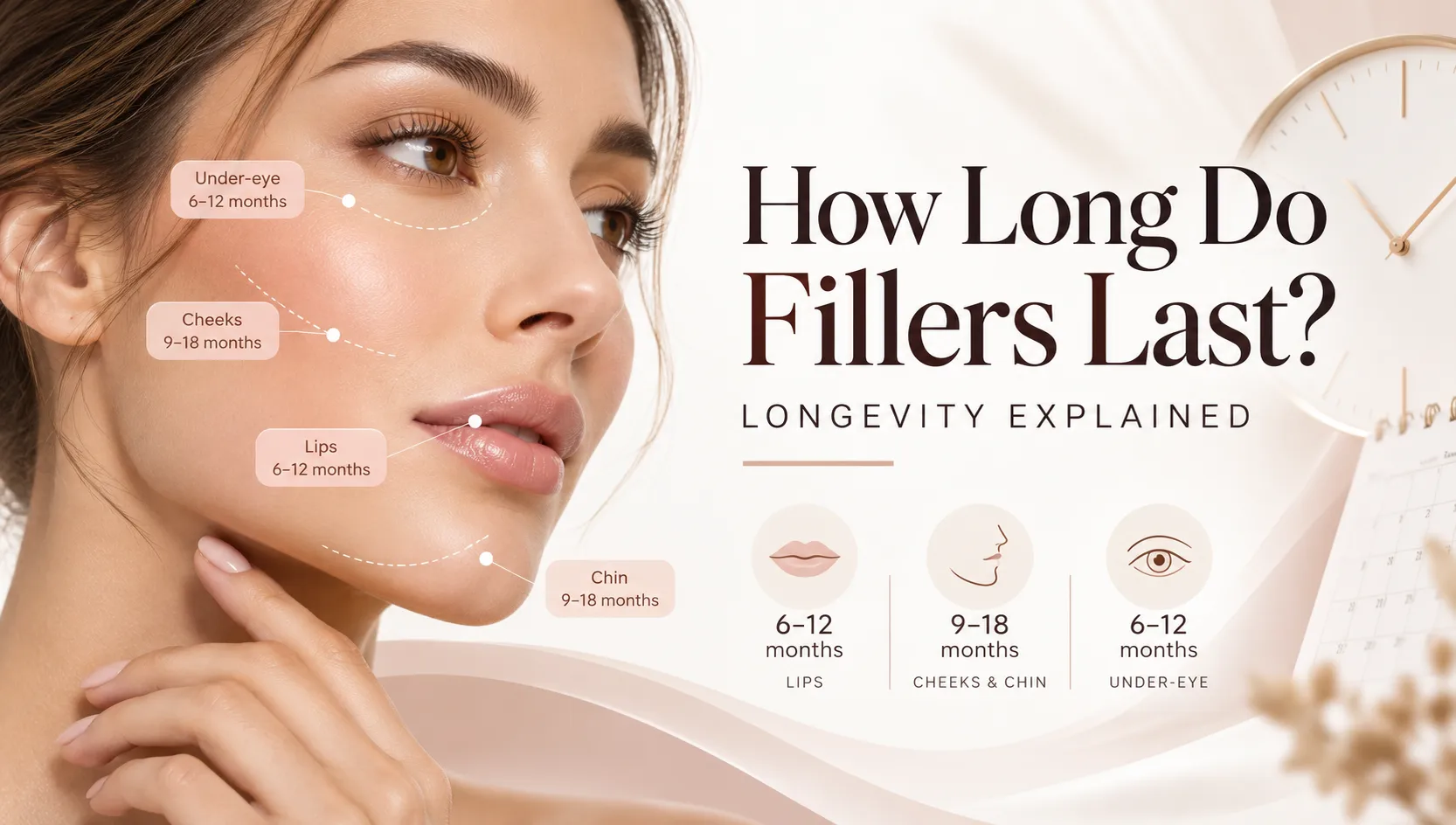
Lip filler generally lasts longer than a lip flip, although neither treatment is permanent. A lip flip relies on the temporary effect of botulinum toxin on muscle activity, so the result gradually disappears as normal muscle function returns.
Lip-filler longevity varies more widely depending on the product, amount used, lip movement, individual metabolism and previous treatment history. For this reason, we would not promise every patient an exact number of months.
The more useful distinction is:
Lip flip: shorter-term change in movement.
Lip filler: longer-lasting change in physical volume and shape.
Maintenance needs should therefore be part of the decision, particularly if you are choosing between the two treatments based partly on convenience.
Lip filler generally produces more visible swelling during the early recovery period. With a lip flip, you may have mild redness, tenderness or small injection-site marks, but there is no filler volume being placed into the lip tissue.
Lip filler commonly causes temporary swelling, tenderness or bruising, particularly during the first few days. If filler is the option you are considering, our Lip Filler Aftercare & Swelling Timeline explains what normally happens from treatment day through the settling period.
Yes, when there are genuinely two separate concerns to address. For example, someone may have:
In that situation, filler could address volume and shape while a lip flip addresses part of the movement. But using both treatments does not automatically create a better result.
If volume is the only concern, a lip flip may add very little. If movement is the only concern, adding filler simply because both treatments are available may create unnecessary volume.
We would consider combination treatment only when the anatomy gives us a clear reason to treat both.
Not necessarily. The best first treatment is the one that addresses the reason you are unhappy with your lips.
Patients sometimes assume that a lip flip should always be tried first because it sounds less committed or more subtle. But consider two different patients.
One has naturally thin lips at rest. A lip flip may provide such a small change that it does not address what they wanted to improve. Another has good natural upper-lip volume but loses almost all of it when smiling. Immediately adding filler may increase the amount of lip tissue without addressing the movement causing the concern.
So we would not choose your first treatment based simply on which one sounds more conservative. We would first work out whether the issue is primarily volume, shape, movement or a combination.
Hyaluronic acid filler can sometimes be dissolved. A lip flip cannot be immediately reversed in the same way.
If clinically appropriate, HA filler can be broken down using an enzyme called hyaluronidase. A lip flip works through temporary muscle relaxation. There is no equivalent injection that simply switches the effect off immediately. If the result is stronger than expected, the effect generally needs to gradually wear off.
This difference can matter when patients are deciding between treatments.
If you want more detail about when filler may need correction, our Lip Filler Migration & Dissolving guide explains how HA filler dissolving is assessed and performed.
The easiest way to compare the treatments is to start with the change you actually want.
| Your Main Concern | Treatment More Relevant to Discuss |
|---|---|
| Upper lip disappears when smiling | Lip flip |
| Upper lip curls inward during smiling | Lip flip |
| Lips are naturally thin at rest | Lip filler |
| Want actual added volume | Lip filler |
| Want more lip-border definition | Lip filler |
| Want to change upper/lower lip proportions | Lip filler |
| Want only a subtle increase in visible upper lip | Lip flip |
| Gummy smile | Assessment first — the cause matters |
| Need more volume and have significant upper-lip retraction | Combination may be considered |
| Unsure whether the concern is volume or movement | Assessment first |
This is a starting point rather than a treatment prescription. Your anatomy still needs to be assessed before deciding what is appropriate.
We look at your lips both at rest and while you smile before deciding which treatment makes sense.
At Maris Clinic in Dubai, we assess your existing lip volume, upper-lip movement, symmetry, proportions and the specific change you would like to achieve.
Looking at the lips only while the face is relaxed can miss an important part of the picture. Equally, looking only at a smiling photograph can make a naturally adequate lip appear thinner than it actually is. Our aim is to determine whether your concern is primarily related to:
If actual volume, shape or definition is what you want to change, this can be discussed during your Lip Fillers treatment plan.
If your upper lip already has reasonable volume but curls inward or becomes significantly less visible when you smile, simply adding more filler may not address the main reason you are seeking treatment.
And if this would be your first filler appointment, our First-Time Lip Filler Guide explains what happens during consultation, treatment and the early recovery period.
A lip flip and lip filler can both make the lips appear fuller, but they work in fundamentally different ways.
Lip filler adds volume. A lip flip changes movement. If your lips are thin even when your face is relaxed, filler is generally the more relevant option to discuss. If your upper lip already has reasonable volume but rolls inward or becomes much less visible when you smile, a lip flip may be worth considering.
Some patients have both concerns and may benefit from a combination, but more treatment is not automatically better.
Book a personalized consultation with our medical team and discover the treatments tailored to your skin and lifestyle.