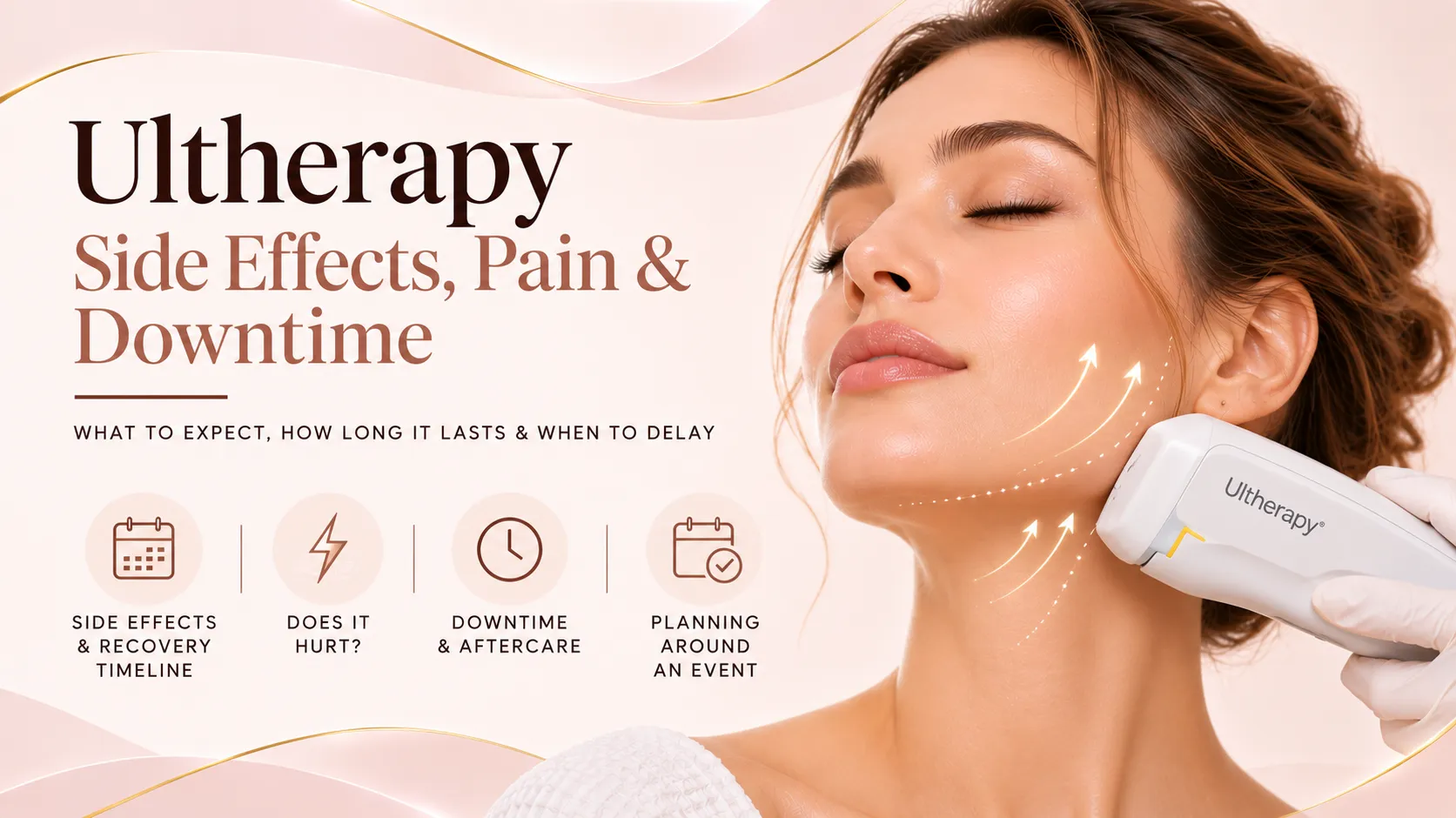
Ultherapy can feel uncomfortable during treatment, but most people can return to their normal daily activities afterwards. Common side effects include temporary redness, mild swelling and tenderness. Redness often settles within hours, swelling within a few days and tenderness within two weeks.
Less common effects include bruising, tingling, numbness and temporary muscle weakness. These usually improve, although some reported complications can be more serious or last longer.
At Maris Clinic in Dubai, we believe you should understand both the expected side effects and the less common risks before deciding on treatment. We’ll explain what Ultherapy feels like, how recovery typically progresses, what to avoid afterwards and when you should seek medical advice.
The most commonly reported Ultherapy side effects are redness, swelling, tenderness and temporary discomfort in the treated area. These generally improve without requiring significant recovery time.
Ultherapy uses microfocused ultrasound energy to create controlled areas of heat beneath the skin. This stimulates collagen remodelling, but the treatment can also cause temporary reactions in the surrounding tissues. The table below summarizes side effects and recovery times reported in clinical evaluations of Ultherapy for the face and neck.
| Side effect | What you may notice | Typical reported duration |
|---|---|---|
| Redness | Flushed or pink skin in the treated area | A few hours |
| Mild swelling | Puffiness around treated areas | 3–72 hours |
| Tenderness | Soreness when touching the skin | 2 days–2 weeks |
| Raised welts | Temporary raised lines following the treatment pattern | Up to 1 week |
| Bruising | Small areas of bruising | 2 days–2 weeks |
| Tingling | Pins and needles or unusual sensations | 2–6 weeks |
| Numbness | Reduced sensation in a treated area | 2–6 weeks |
| Temporary muscle weakness | Reduced movement or facial asymmetry | 2–6 weeks |
| Burns or scarring | Blistering, skin injury or persistent marks | Variable; requires medical assessment |
These are typical clinical-trial timelines, not guaranteed recovery periods. Some reported effects have lasted longer, particularly nerve-related symptoms. The official Ultherapy instructions for use provide further information about treatment reactions, precautions and reported complications.
“I’ve noticed raised lines on my skin.”
These may be temporary welts caused by localized swelling along the treatment lines. In clinical evaluations, they generally resolved within a week. Avoid rubbing or applying pressure to the affected area. Contact your practitioner if the marks worsen, become painful or don’t improve.
“My smile looks uneven.”
Temporary facial muscle weakness can occur if a motor nerve is affected during treatment. In clinical trials, these effects generally resolved within two to six weeks.
However, longer-lasting nerve symptoms have also been reported. New facial weakness or asymmetry needs prompt medical assessment rather than waiting for it to resolve.
“Can Ultherapy cause facial fat loss?”
Unwanted facial fat or volume loss has been reported following microfocused ultrasound treatment.
Ultherapy uses real-time imaging to help practitioners visualize tissue layers and select treatment depths. This can support accurate energy delivery, but it cannot eliminate every risk. Appropriate patient selection, device settings and practitioner training are important, particularly when treating areas with limited facial fat.
Ultherapy can cause noticeable discomfort during treatment, particularly when ultrasound energy reaches deeper tissues. Patients often describe the sensation as brief bursts of heat, tingling or a sharp prickling feeling.
Some areas may feel more sensitive than others. Treatment along the jawline or close to bony structures can be more uncomfortable than areas with thicker soft tissue.
Pain tolerance also varies between individuals, so one person’s experience may be different from yours.
Each ultrasound pulse delivers energy to a selected depth beneath the skin.
You may experience:
At Maris Clinic, we discuss expected discomfort and suitable comfort-management options before treatment. The approach depends on your medical history, sensitivity and the areas being treated.
During the procedure, let your practitioner know if the discomfort becomes difficult to tolerate. Treatment settings and comfort measures can be reviewed within the limits of a safe and appropriate treatment protocol.
Some patients experience tenderness, soreness or sensitivity after the procedure. Post-treatment discomfort commonly improves within the first couple of days. Tenderness when touching the area can last up to two weeks.
Pain should generally improve rather than become progressively worse. Severe or increasing pain requires medical assessment.
Ultherapy usually requires little or no interruption to everyday activities. Many patients can return to work or their usual routine on the same day.
However, minimal downtime doesn’t mean there are no side effects. Temporary redness, swelling, tenderness or bruising may still be visible or noticeable after treatment.
| Recovery period | What you may experience | Daily activities |
|---|---|---|
| Treatment day | Redness, warmth or mild swelling | Many patients return to normal activities |
| Days 1–3 | Swelling or tenderness may continue | Light routines are generally manageable |
| Days 4–7 | Initial reactions usually improve; occasional bruising or welts may remain | Most activities can usually continue |
| Days 8–14 | Some tenderness or bruising may persist | Follow aftercare guidance and report unusual symptoms |
| Weeks 2–6 | Temporary numbness or tingling may continue in some patients | Nerve-related symptoms should be assessed and monitored |
Most people don’t need time away from work simply because they’ve had Ultherapy.
However, recovery varies. If you develop significant swelling, bruising or another unexpected reaction, you may need additional care or adjustments to your activities.
Most patients can continue their usual routine after Ultherapy, but the treated skin may be temporarily sensitive. Your practitioner will explain any restrictions relevant to your treatment. A few practical precautions can help keep you comfortable:
You should also follow any specific instructions provided during your appointment, as aftercare may differ according to the areas treated and your skin’s response.
Many patients can apply make-up shortly after Ultherapy because the treatment does not normally break the skin’s surface. However, wait for your practitioner’s advice if your skin is unusually sensitive, blistered or otherwise irritated.
Many patients can resume their usual physical activities without a prolonged recovery period. If you have noticeable swelling, tenderness or discomfort, ask your practitioner whether strenuous exercise should be delayed until these symptoms improve.
Planning Ultherapy approximately three to six months before an important event allows time for gradual collagen remodelling and visible improvement. Although recovery is usually short, the lifting effect develops over several months.
| Time before your event | What to consider |
|---|---|
| 3–6 months | Allows time for gradual lifting and tightening results to develop |
| 6–8 weeks | Some improvement may develop, but the full response may not be visible |
| 2–4 weeks | Initial side effects may have settled, but lifting results are likely to remain limited |
| Less than 2 weeks | Leaves little time for unexpected bruising, swelling or other reactions to resolve |
If you’re preparing for a wedding, holiday or another event where you’ll be photographed, the difference between downtime and results is worth remembering.
You may be comfortable returning to work the same day, but that doesn’t mean the final skin-tightening effect will be visible immediately. Discuss your event date and treatment expectations during the consultation so you can plan accordingly.
Ultherapy is a specific microfocused ultrasound treatment that uses real-time imaging to visualise tissue beneath the skin. HIFU is a broader category of focused ultrasound technologies, and devices can differ in their energy delivery and imaging capabilities.
Ultherapy’s imaging technology helps the practitioner assess tissue layers and deliver energy at selected depths. Other HIFU devices may use different transducers, energy settings and treatment protocols. Not every device provides the same imaging functionality.
A published comparison of Ultherapy and three other ultrasound devices identified differences in imaging and energy delivery.
However, the study was supported by Merz Aesthetics, the manufacturer associated with Ultherapy, and compared specific devices rather than every HIFU system. These findings don’t mean that all other HIFU treatments are unsafe.
Whether you’re considering Ultherapy or another ultrasound-based treatment, it’s worth asking:
Ultherapy isn’t suitable for everyone, and certain medical conditions or implants may prevent or affect treatment. According to the manufacturer’s instructions, Ultherapy is contraindicated in patients with:
The manufacturer also identifies groups for whom treatment has not been adequately evaluated, including pregnant or breastfeeding patients and people with certain medical conditions.
These include diabetes, epilepsy, autoimmune diseases, herpes simplex, Bell’s palsy and some bleeding disorders. These conditions are not all classified as absolute contraindications, but they require careful medical consideration. Tell your practitioner if you have:
At Maris Clinic, we review relevant medical history and treatment concerns before discussing whether Ultherapy is appropriate.
Most side effects observed in Ultherapy clinical trials were temporary, but more serious complications have been reported during wider clinical use. The manufacturer’s post-market safety information includes reports of:
Because these reports are collected from a population of uncertain size, their frequency cannot always be reliably calculated, and a direct causal relationship cannot always be confirmed.
This distinction is important: clinical trials provide structured safety information, while post-market surveillance can identify complications that may not have appeared during smaller studies.
A 2026 review of microfocused ultrasound complications also emphasised the importance of prompt assessment and appropriate management when adverse effects occur.
Ultherapy has an established clinical safety record, but no energy-based aesthetic procedure is completely risk-free.
Mild redness, swelling and tenderness generally improve with time. However, unexpected symptoms should not be ignored. Contact your treating practitioner promptly if you notice:
Do not wait several weeks for a new nerve-related symptom to resolve before seeking assessment.
Sudden facial drooping accompanied by speech problems, arm weakness or other stroke-like symptoms requires emergency medical care. Sudden vision changes also require urgent emergency assessment. If symptoms are severe or rapidly progressing, seek emergency medical help rather than relying on a routine clinic callback.
Ultherapy has an established clinical safety record when used appropriately in suitable patients. Most reported clinical-trial side effects were temporary, but burns, nerve-related problems and unwanted tissue changes have also been reported. Patient selection and practitioner training are important.
Temporary numbness or muscle weakness can occur. No permanent facial nerve injuries were reported in the manufacturer’s clinical trials, but longer-lasting neurological symptoms have been reported after wider clinical use. New facial weakness requires prompt medical assessment.
Unwanted facial fat or volume loss has been reported following microfocused ultrasound treatment. Ultherapy’s imaging helps practitioners assess tissue depth, but it does not remove every risk. Appropriate treatment planning is particularly important in areas with limited facial fat.
Yes, many patients return to work and routine activities on the same day. Temporary redness or mild swelling may still occur, so individual recovery can differ.
Mild swelling generally resolves within 3–72 hours in clinical evaluations of face and neck treatment. Swelling that becomes increasingly severe, painful or unusual should be assessed rather than assumed to be normal.
Temporary numbness typically resolved within two to six weeks in clinical trials. However, symptoms can persist longer, and new or worsening numbness should be reported promptly.
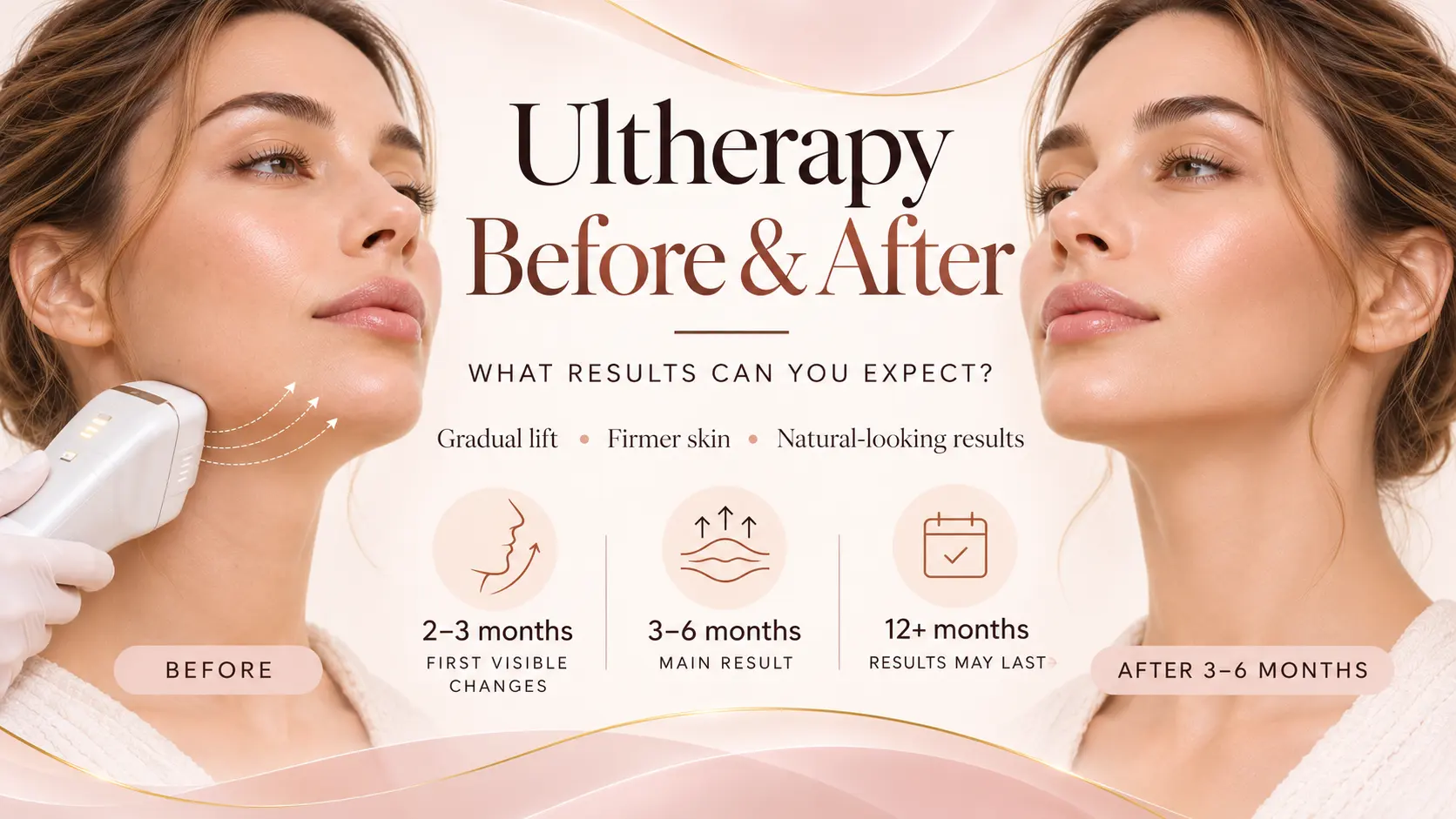
Ultherapy results develop gradually as collagen remodelling occurs. Some patients notice improvements around two to three months, with further changes possible for up to six months. Read our guide to Ultherapy before-and-after results for a detailed timeline.
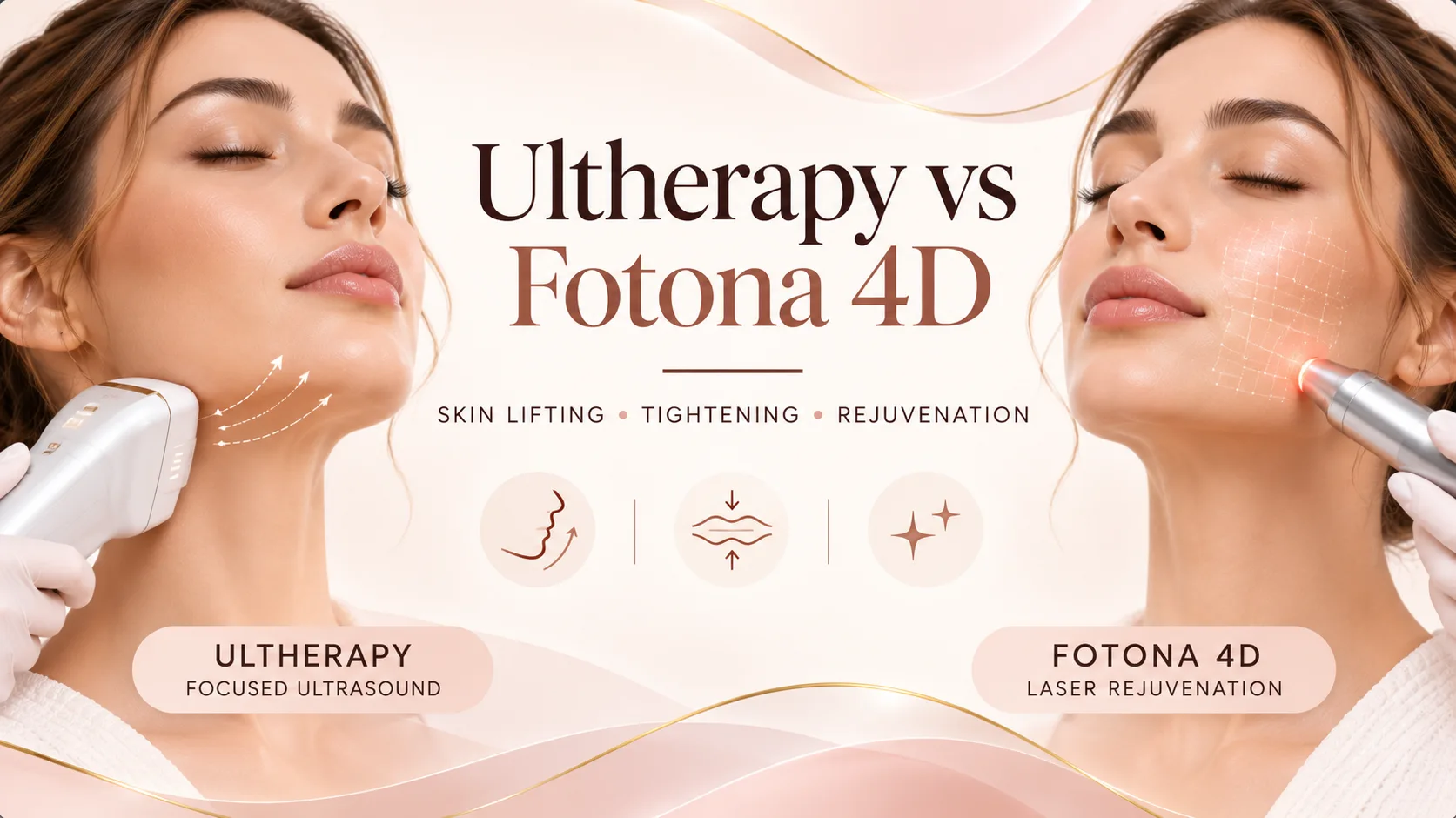
The treatments use different technologies and produce different sensations. Ultherapy can cause deeper ultrasound-related discomfort, while Fotona 4D produces laser-related warmth and possible surface sensitivity. Our Ultherapy vs Fotona 4D comparison explains the differences.
Understanding Ultherapy side effects, discomfort and downtime is an important part of deciding whether the treatment is right for you.
At Maris Clinic in Dubai, we assess your skin concerns, facial anatomy, medical history and treatment expectations before discussing the procedure.
We explain the expected sensations, possible side effects, recovery requirements and limitations so you can make an informed treatment decision.
If you’re considering non-surgical facial lifting, explore our Ultherapy treatment in Dubai or book a consultation at Maris Clinic in Jumeirah 1 to discuss your suitability and expected recovery.
Book a personalized consultation with our medical team and discover the treatments tailored to your skin and lifestyle.