If you’re considering Ultherapy, you’ve probably looked at before-and-after photos and wondered how much difference the treatment could make to your own face. Some results look noticeable, while others are more subtle. So what should you realistically expect?
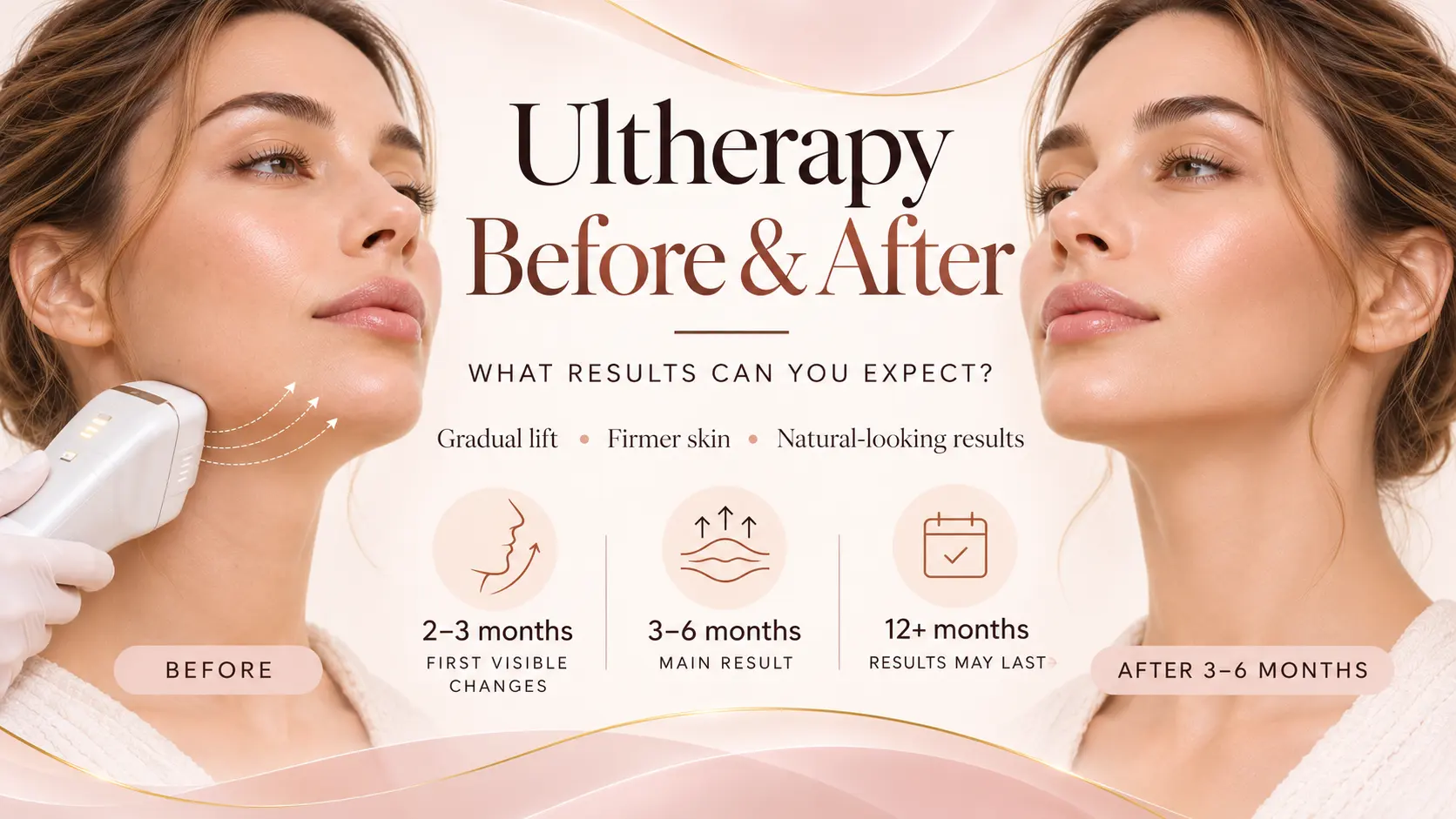
Ultherapy results develop gradually. Many patients notice improvements in skin firmness and lifting around two to three months after treatment, with further changes possible for up to six months. Results can last a year or longer, although this varies with your skin condition, age and individual response.
At Maris Clinic in Dubai, we focus on realistic expectations. Ultherapy can help improve mild to moderate skin laxity, but it cannot reproduce the results of a surgical facelift.
Let’s look at what happens after treatment, which areas may improve and how to assess your Ultherapy before-and-after results.
Not every Ultherapy before-and-after photograph shows a fair comparison. Changes in lighting, facial position and temporary swelling can make results look more dramatic than they are. When reviewing photographs, watch for:
A reliable comparison uses consistent lighting, camera angles and facial expressions, ideally with photographs taken before treatment and again several months afterwards. We’ll explain how to take your own progress photographs further down.
Ultherapy uses microfocused ultrasound energy with visualization to deliver controlled heat at selected depths beneath the skin. This stimulates collagen remodelling, which gradually improves skin firmness and lifting in suitable treatment areas.
Because collagen changes develop over time, Ultherapy does not produce the immediate lifting effect associated with surgery. Here’s how the results may progress.
| Time after treatment | What you may notice |
|---|---|
| Treatment day | Temporary redness, tenderness or mild swelling |
| Days 1–3 | Initial redness and swelling often begin settling |
| Weeks 1–2 | Little visible lifting; some tenderness may remain |
| Weeks 2–6 | Collagen remodelling is underway, but changes may still be subtle |
| Months 2–3 | Some patients begin noticing firmer skin or improved facial contours |
| Months 3–6 | Further lifting and tightening may become visible |
| Months 6–12 | Improvements may remain noticeable as natural ageing continues |
| After 12 months | Results vary; maintenance can be considered following reassessment |
These are general expectations rather than guaranteed milestones. Some people notice changes earlier, while others experience smaller improvements.
Ultherapy can produce measurable improvements in skin lifting, but the results are generally subtle rather than dramatic. Clinical research provides a clearer picture of what patients may realistically expect:
These findings are encouraging, but results vary depending on the treated area, degree of skin laxity and individual response.
Ultherapy usually creates gradual changes rather than an obvious overnight transformation.
You might notice that the skin beneath your chin looks firmer in photographs or that your brow appears slightly more lifted. Because these changes happen over several months, other people may not notice them immediately.
This is one reason before-and-after photographs are valuable. Comparing images taken under consistent conditions can make subtle improvements easier to assess.
Ultherapy results depend on the treatment area and the amount of skin laxity present before treatment. Improvements may involve lifting, tighter-looking contours or a reduction in the appearance of wrinkles.
| Treatment area | Possible visible improvement | What to keep in mind |
|---|---|---|
| Brows | Slight elevation of the brow and a more open-looking eye area | Lifting is usually subtle |
| Jawline | Firmer-looking lower-face contours | More suitable for early laxity than substantial jowling |
| Under the chin | Improved skin tightness and chin-to-neck definition | Does not remove significant excess skin or fat |
| Neck | Reduced appearance of mild skin looseness | Pronounced neck sagging may need another approach |
| Décolletage | Improvement in the appearance of lines and wrinkles | Results depend on the skin’s condition and treatment plan |
The treatment does not affect every area in the same way. For example, someone with mild skin looseness beneath the chin may notice a different improvement from someone seeking brow lifting. Your starting anatomy matters as much as the technology itself.
Ultherapy is generally most suitable for people with mild to moderate skin laxity who want gradual, natural-looking improvement without surgery.
You may be a suitable candidate if:
Ultherapy does not address every cause of facial ageing. A different approach may be more suitable if:
Ultherapy can also be considered for men. Suitability depends on facial anatomy, tissue characteristics and the areas requiring treatment rather than gender alone.
At Maris Clinic, we assess the underlying concern before discussing whether skin tightening is likely to provide a meaningful improvement.
Consistent photographs are one of the simplest ways to track gradual Ultherapy results. You don’t need professional equipment, but you do need to keep the conditions as similar as possible.
| When | Why it helps |
|---|---|
| Before treatment | Establishes your starting appearance |
| 1 week after | Documents early recovery once initial reactions begin settling |
| 3 months after | Helps assess developing skin-tightening changes |
| 6 months after | Allows comparison after further collagen remodelling |
| 12 months after | Helps assess how results have changed over time |
When comparing photographs, focus on the areas actually treated.
For example, if the treatment targeted your lower face, examine the jawline and skin beneath the chin rather than looking for unrelated changes across your entire face.
If you notice little improvement after several months, a follow-up assessment can help determine whether the response is consistent with your starting skin condition and treatment plan.
Ultherapy results may last a year or longer, but longevity varies from person to person.
The treatment stimulates collagen remodelling, but it does not stop the natural ageing process. Skin continues to change due to age, sun exposure and other biological factors. Results may be influenced by:
Some patients consider maintenance treatment after a year or more. However, repeat sessions should be based on the visible response and clinical assessment rather than a fixed schedule.
Ultherapy stimulates collagen remodelling, but protecting your skin remains important after treatment.
Dubai’s strong sun exposure makes UV protection particularly relevant because ultraviolet radiation contributes to collagen and elastin damage. A few practical habits can help support long-term skin health:
If you’re considering Ultherapy before a wedding or another important occasion, allow sufficient time for results to develop.
Planning approximately three to six months ahead provides a more realistic opportunity to assess gradual tightening than booking treatment shortly before the event. The exact timing should be discussed during your consultation.
Ultherapy usually involves little interruption to everyday activities, although temporary skin reactions can occur. Common effects include redness, mild swelling, tenderness, tingling and sensitivity around the treated area.
These usually improve, but some sensations can persist longer. Less common complications, including nerve-related symptoms and unwanted changes in underlying tissue, have also been reported.
Contact your treating practitioner if you experience persistent or worsening pain, unusual numbness, blistering or unexpected changes in facial appearance. A proper assessment helps identify whether the treatment is suitable for your medical history, anatomy and skin concerns.
Some patients experience smaller improvements than expected, even after allowing sufficient time for collagen remodelling. This does not automatically mean the procedure was performed incorrectly.
The result may be limited by the degree of skin laxity, existing facial volume, tissue characteristics or individual response. If your results are difficult to see:
Additional Ultherapy sessions are not automatically the best solution. The next step depends on why the expected improvement has not occurred.
Some patients notice an initial change, but temporary swelling can influence the appearance of the skin. Collagen-related lifting generally develops gradually over the following months rather than immediately after treatment.
Many patients begin noticing improvements around two to three months after treatment. Further tightening may develop over three to six months, although the timing and degree of improvement vary.
Results may remain noticeable for a year or longer. Longevity depends on the treated area, skin condition, individual response and ongoing ageing. Maintenance treatments can be considered following clinical reassessment.
Many patients begin with one session, although some may benefit from additional treatment. The number of sessions depends on skin laxity, treatment goals, response and the practitioner’s assessment.
No. Ultherapy can improve mild to moderate skin laxity without surgery, but it cannot remove substantial excess skin or deliver the same degree of tissue repositioning as a surgical facelift.
Most patients can return to normal daily activities soon after treatment. Temporary redness, swelling or tenderness may occur, even when significant downtime is not required.
Ultherapy may improve the appearance of early jowling when skin laxity contributes to reduced jawline definition. However, heavy jowls, substantial tissue descent or facial volume changes may require a different approach.
Ultherapy before-and-after results depend on your starting skin condition, the areas treated and how your tissues respond over time. The aim is gradual improvement in skin firmness and lifting, not an immediate or dramatic transformation.
At Maris Clinic in Dubai, we assess your facial structure, degree of skin laxity and treatment expectations before discussing whether Ultherapy is suitable for you.
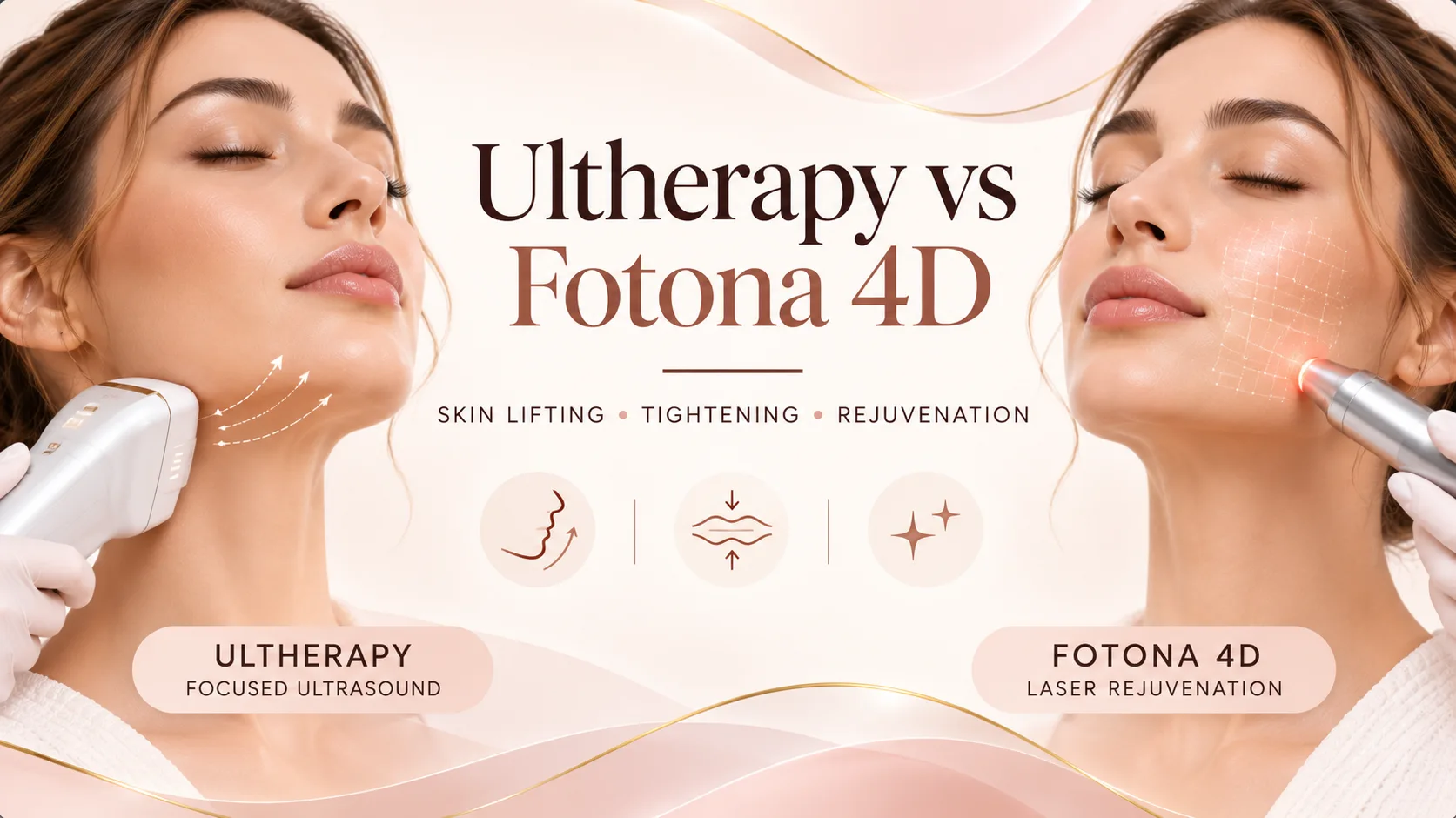
If you’re comparing non-surgical rejuvenation options, you can also explore our guides to Ultherapy vs Secret RF Duo and Ultherapy vs Fotona 4D. To understand what improvement may be realistic for your skin, learn more about Ultherapy treatment at Maris Clinic or book a consultation for an individual assessment.
Book a personalized consultation with our medical team and discover the treatments tailored to your skin and lifestyle.