Pregnancy can leave physical changes that weight loss and exercise cannot always correct, including excess abdominal skin, abdominal wall laxity, changes in breast volume or position, and localized fat.
A mommy makeover can address several of these concerns, but there is no standard combination of procedures that every patient needs. One person may benefit from abdominal surgery alone, while another may need breast surgery, HD liposuction or a combination of procedures.
The important question is not simply whether you should have a mommy makeover in Dubai, but which anatomical changes are present and which procedures can appropriately address them.
A mommy makeover is not defined by a fixed list of operations. The starting point is identifying which anatomical change is causing each concern.
Pregnancy can affect several tissues at the same time. The abdominal skin may stretch, the abdominal wall may become lax, localized fat may remain, breast volume may decrease, and the breasts may sit lower than before pregnancy.
These changes require different treatment approaches.
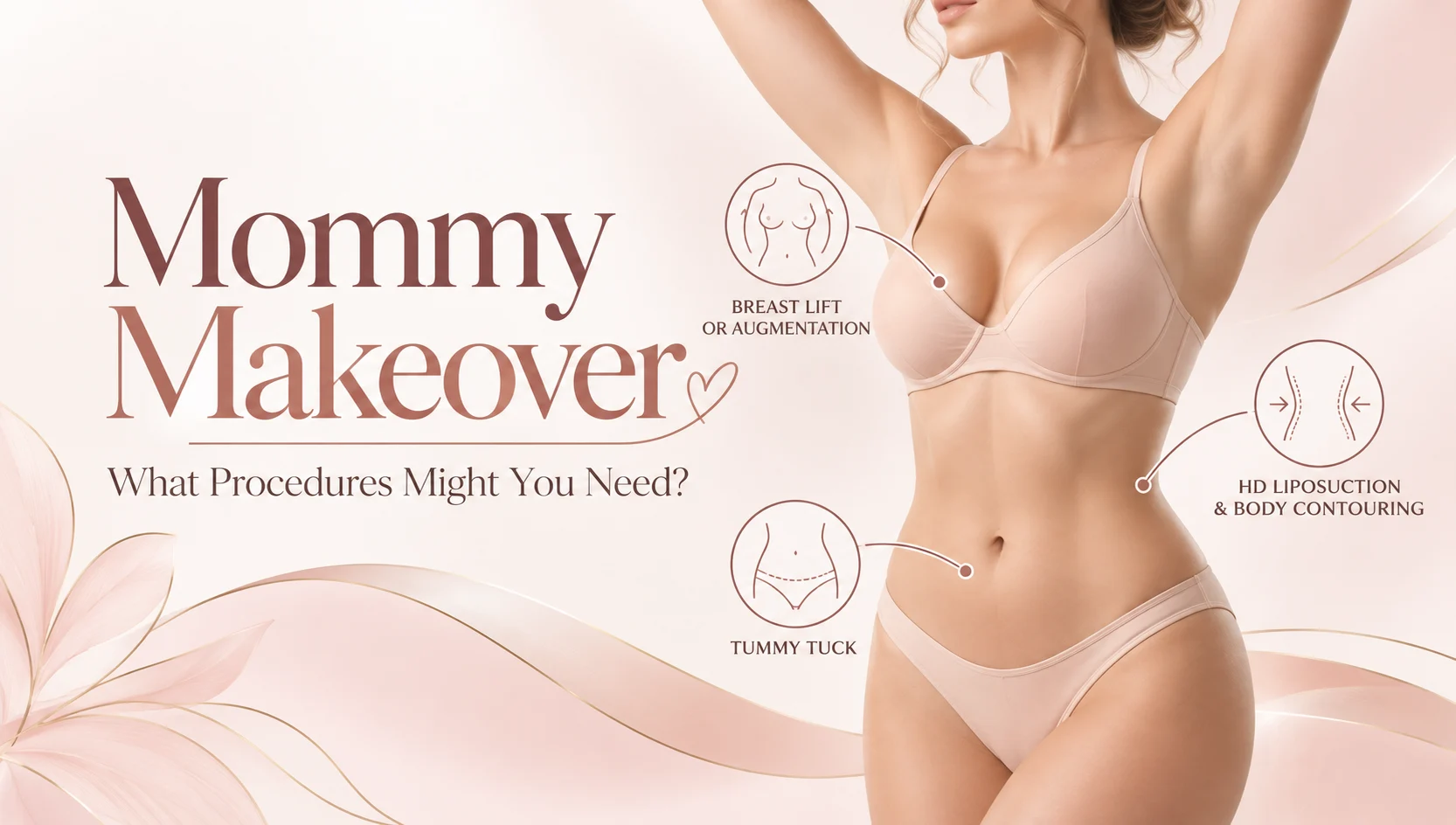
| Post-Pregnancy Concern | Procedure That May Be Considered | What It Addresses |
|---|---|---|
| Loose abdominal skin | Tummy tuck | Removes selected excess abdominal skin |
| Abdominal wall laxity | Abdominoplasty with appropriate repair | Addresses selected abdominal wall changes |
| Breast sagging | Breast lift | Repositions and reshapes breast tissue |
| Loss of breast volume | Breast augmentation | Adds volume where clinically appropriate |
| Excess breast volume | Breast reduction | Reduces and reshapes breast tissue |
| Localized fat | HD liposuction | Removes selected fat deposits and refines body contour |
The distinction matters because one procedure cannot correct every post-pregnancy change. HD liposuction does not remove substantial loose skin, breast implants alone cannot reliably correct significant breast sagging, and exercise cannot remove excess skin.
The procedure therefore needs to match the tissue responsible for the concern.
A persistent abdominal bulge after pregnancy is often described as stubborn belly fat, but fat may not be the only reason for the change.
The abdomen can be affected by subcutaneous fat, excess skin and abdominal wall laxity. These are separate anatomical issues, and identifying which one is responsible can change the treatment plan.
A tummy tuck after pregnancy, or abdominoplasty, is primarily considered when excess abdominal skin is present. Depending on the anatomy identified during examination, selected abdominal wall changes may also be addressed.
Diastasis recti can form part of this assessment. It refers to widening of the linea alba between the rectus abdominis muscles. However, an abdominal bulge alone does not confirm diastasis recti.
This is why a tummy tuck should be considered following physical assessment rather than on the assumption that every post-pregnancy abdomen requires muscle repair.
Post-pregnancy breast changes are often grouped together, but volume loss and ptosis, the medical term for breast sagging, are different anatomical concerns.
A breast lift in Dubai, or mastopexy, reshapes and repositions the breast when sagging is the main concern. It does not primarily add substantial breast volume.
Breast augmentation addresses a different issue. An implant can restore or increase volume and alter breast shape, but augmentation alone is not a substitute for a lift when significant sagging is present.
Some patients experience both volume loss and sagging. In selected cases, breast augmentation and breast lift surgery may therefore be considered together.
Breast reduction follows a different pathway and may be considered when excess breast volume is the main concern.
The appropriate breast procedure should therefore be based on breast volume, nipple position, skin quality, tissue characteristics and the patient’s desired outcome.
A patient can be close to their preferred body weight and still have localized fat around the abdomen, waist or flanks.
HD liposuction can remove selected subcutaneous fat deposits while creating more precise body contour and definition. However, it does not remove substantial excess skin or correct abdominal wall laxity.
A tummy tuck addresses excess abdominal skin and, where appropriate, selected abdominal wall changes. It is not a general weight-loss procedure.
A simple way to understand the difference is:
Predominantly localized fat → HD liposuction may be considered.
Predominantly excess skin → abdominoplasty may be considered.
Localized fat with significant skin laxity → HD liposuction combined with abdominoplasty may be assessed.
Skin elasticity, fat distribution, scars, abdominal wall anatomy, previous C-sections and weight stability can all influence this decision.
The appearance of the abdomen alone is therefore not enough to determine which procedure is appropriate.
Breast and abdominal procedures can sometimes be performed during the same operation, but combining procedures changes the overall scale of surgery and recovery.
A 2026 systematic review and meta-analysis evaluated eight studies involving 138,020 patients, including 9,422 who underwent combined abdominoplasty and breast surgery.
Overall complication rates were not statistically different when combined procedures were compared collectively with isolated procedures. However, combined surgery had a higher complication risk when compared specifically with breast surgery alone.
This is why describing a mommy makeover simply as “safe” or “unsafe” is not particularly useful.
The more relevant question is whether a particular combination of procedures is appropriate for the individual patient.
Factors that can influence this decision include:
For one patient, combining breast and abdominal surgery may be considered appropriate. For another, performing the procedures separately may reduce the demands of a single operation and recovery period.
There is no single date that determines when someone is ready for a mommy makeover.
Breast size and composition can continue to change during and after breastfeeding. Body weight may also fluctuate during the postpartum period. Performing surgery while these factors are still changing can make treatment planning and long-term results less predictable.
Weight stability is particularly relevant because a mommy makeover is body contouring after pregnancy, not a weight-loss procedure. Significant weight loss or gain after surgery can change the abdominal skin, breast volume and overall body contour again.
Future pregnancy plans also matter. Pregnancy can still occur after these procedures, but further stretching of the abdomen and additional changes in the breasts may affect previous surgical results.
Surgery is therefore generally considered when postpartum changes have sufficiently stabilized, overall health is suitable for surgery and future pregnancy plans have been discussed as part of the assessment.
There is no single mommy makeover recovery time because recovery depends on the procedures performed.
A breast lift with limited HD liposuction places different demands on the body from an abdominoplasty with abdominal wall repair combined with breast surgery.
As the extent of surgery increases, mobility restrictions, wound care, lifting limitations and the need for support at home can also change.
This is particularly important for parents of babies or young children. Abdominal surgery may temporarily limit lifting, so childcare arrangements may need to form part of preoperative planning.
Return to work also depends on the type of job. Someone with desk-based work will have different recovery requirements from someone whose job involves lifting, prolonged standing or significant physical activity.
Each procedure included in a mommy makeover carries its own risks, and combining surgery can add further considerations.
Potential complications may include:
Breast implants also have risks specific to implants.
Venous thromboembolism, including deep vein thrombosis and pulmonary embolism, is another important consideration in major body-contouring surgery.
For this reason, risk assessment is as important as the aesthetic plan. Medical history, medications, nicotine use, previous operations, clotting risk and wound-healing risk should all be reviewed before deciding whether a combination of procedures is appropriate.
Yes. A previous C-section does not automatically prevent further abdominal or body-contouring surgery.
The existing scar, skin distribution, abdominal wall anatomy, previous surgical history and planned procedure should all be evaluated when deciding the surgical approach.
No. A tummy tuck is not a compulsory part of a mommy makeover.
It is generally considered when excess abdominal skin or relevant abdominal wall changes are present. If the main concern is localised fat and skin quality is suitable, HD liposuction may be considered instead.
Not necessarily.
Breast implants primarily add volume. If breast sagging is the main concern, a breast lift may be more appropriate.
Some patients may benefit from breast augmentation, others from a lift or reduction, and selected patients may require a combination of augmentation and lift.
A mommy makeover is not designed as a weight-loss procedure.
If significant weight loss is planned, reaching a more stable weight before surgery can make body-contouring decisions and long-term results more predictable.
At Maris Clinic in Dubai, the starting point is not choosing a standard package of procedures. It is identifying which post-pregnancy changes are present and determining which surgical approach addresses each one.
Excess abdominal skin may point towards abdominoplasty, while localized fat may be addressed with HD liposuction. Breast sagging, loss of breast volume and excess breast volume also require different surgical approaches.
Whether these procedures should be performed together depends on anatomy, general health, previous surgery, weight stability, future pregnancy plans and the recovery demands of the proposed operation.
If you are considering surgery, our Mommy Makeover treatment page explains the procedure, treatment process, recovery considerations and care available at Maris Clinic.
A mommy makeover may be appropriate when pregnancy has left multiple physical changes that cannot all be addressed with one procedure.
The decision should begin by identifying the source of each concern. Excess abdominal skin, abdominal wall laxity, localized fat, breast sagging and breast volume loss are different anatomical issues and may require different treatments.
Not every patient needs a tummy tuck. Not every patient needs breast implants. Not every patient needs multiple procedures performed at the same time.
The appropriate surgical plan is the one that matches your current anatomy, health, goals and recovery needs rather than a predetermined mommy makeover package.
Book a personalized consultation with our medical team and discover the treatments tailored to your skin and lifestyle.