Pregnancy, breastfeeding, weight changes, ageing and genetics can all affect breast volume, shape and position. For some women, the main concern is lost fullness. For others, it is sagging or a lower breast position. Sometimes, both occur together.
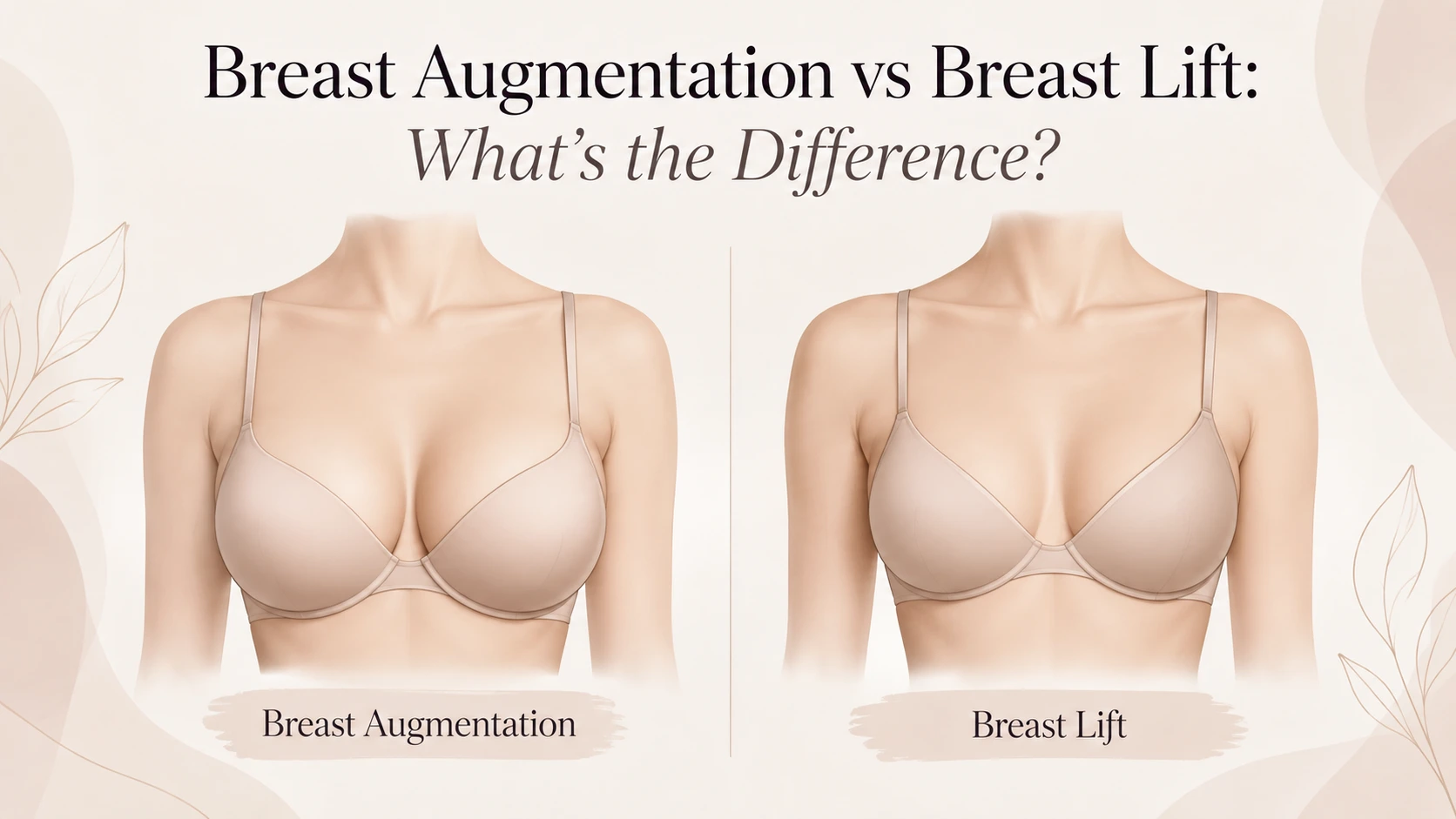
This is the main difference between breast augmentation and a breast lift: augmentation primarily adds volume and projection, while a breast lift reshapes and raises the existing breast tissue.
When both volume loss and sagging are present, the procedures may sometimes be combined.
| Concern | Breast Augmentation | Breast Lift | Lift + Augmentation |
|---|---|---|---|
| Increase breast volume | Yes | No significant increase | Yes |
| Improve projection | Yes | Can improve shape and lifting | Yes |
| Correct significant sagging | Usually not alone | Yes | Yes |
| Reposition low nipples | Usually no | Yes | Yes |
| Remove excess skin | No | Yes | Yes |
| Restore lost fullness | Yes | Limited | Yes |
In simple terms:
Augmentation addresses volume. A breast lift addresses position. A combined procedure can address both.
Breast augmentation, also called augmentation mammoplasty, increases breast volume and can improve fullness, projection and symmetry.
It is most commonly performed using silicone or saline breast implants, although fat transfer may be considered in selected cases.
Breast augmentation may be considered when the main concern is:
An implant can add volume, but augmentation alone does not reliably correct significant sagging or reposition a nipple that sits too low.
If sagging is the main concern, a breast lift may be more appropriate.
A breast lift, medically known as mastopexy, focuses on breast position and shape rather than significantly increasing size.
During surgery, excess skin is removed, the breast tissue is reshaped, and the nipple and areola may be repositioned higher on the breast.
A breast lift may be considered when:
A lift can create a firmer, higher breast contour, but it does not add volume in the same way as breast augmentation.
The most suitable procedure depends on the specific concern being treated.
If your breasts sit in a position you are happy with but have lost fullness, breast augmentation may be the main consideration.
If you are satisfied with your breast volume but want to address sagging, loose skin or nipple position, a breast lift may be considered.
If your breasts have both lost volume and dropped lower on the chest, a breast lift with augmentation may be considered.
During consultation, a plastic surgeon may assess:
These factors help determine whether augmentation, mastopexy or a combination better matches your anatomy and goals.
Some women experience both breast sagging and volume loss, particularly after pregnancy, breastfeeding or significant weight change.
In these cases, augmentation mastopexy combines a breast lift with breast augmentation.
The breast lift removes excess skin and improves breast position, while augmentation restores or increases volume.
A combined procedure may be considered when there is:
Whether both procedures should be performed together depends on breast anatomy, skin quality and the changes being planned.
One of the practical differences between getting breast implants and having a breast lift is scarring.
To carry out breast augmentation an incision is needed in order to place the implant, whereas a breast lift usually includes further incisions since excess skin has to be removed and the breast reshaped.
The position of the scars will be around the areola if a lot of lifting is needed, or they may go vertically towards the breast crease, or else they can run along the crease under the breast.
The scars resulting from a breast lift are permanent, even though they usually become less obvious as they mature.
Both procedures carry potential surgical risks.
With breast augmentation, these can include capsular contracture, implant rupture or deflation, implant displacement, changes in nipple or breast sensation, asymmetry, infection and the possibility of further surgery.
With a breast lift, possible risks include scarring, changes in sensation, asymmetry, wound-healing problems and changes in nipple or areola shape.
Both procedures also carry general surgical risks such as bleeding, infection and complications related to anaesthesia.
The risks, expected outcome and limitations of each procedure should be discussed individually with a qualified plastic surgeon before surgery.
Recovery varies depending on the procedure performed and individual healing.
After breast augmentation, swelling, tightness and soreness are common during the early recovery period. Light activities may gradually resume as healing progresses, while strenuous exercise and heavy lifting should be avoided until cleared by the surgeon.
Recovery after a breast lift can also involve swelling, tenderness and incision healing. Because skin and breast tissue are being reshaped, scar healing continues beyond the initial recovery period.
Recovery may be more involved when augmentation and lifting are performed together.
Patients may also be advised to wear a supportive surgical bra and follow temporary activity restrictions during healing.
Your main concern is smaller breast size, reduced fullness or lack of projection without significant sagging.
Your main concern is sagging, stretched skin or low nipple position and you do not necessarily want additional breast volume.
You want to address both breast sagging and volume loss.
The final decision depends on breast anatomy, skin quality, general health and the result you want to achieve.
The main distinction is the concern being treated. Breast augmentation primarily addresses lost or insufficient volume, while a breast lift addresses sagging, stretched skin and breast position. If both volume loss and sagging are present, a combined procedure may be considered.
No. Although both can change breast contour, they work differently. Augmentation adds volume and projection, while a lift reshapes and raises the existing breast tissue.
When both volume loss and sagging are present, one procedure alone may not address every concern. A surgeon may therefore discuss combining breast augmentation with a breast lift, depending on breast anatomy and the desired result.
Not necessarily. The degree of sagging, nipple position, skin elasticity and desired breast shape all influence treatment planning. Mild changes may require a different approach from more significant breast sagging.
A breast lift can reposition a nipple and areola that sit too low on the breast. Breast augmentation primarily changes breast volume and projection and does not reliably correct significantly low nipple position on its own.
A breast lift generally requires more extensive incisions because excess skin is removed and the breast tissue is reshaped. Breast augmentation also requires an incision, but the scar pattern is usually more limited.
Yes. Recovery depends on the type and extent of surgery performed. A breast lift involves skin and tissue reshaping, while augmentation involves adding breast volume. Recovery may be more involved when both procedures are combined.
Breast augmentation and breast lift surgery address different concerns. Breast augmentation primarily restores or increases volume and projection. A breast lift raises and reshapes the existing breast. When both sagging and volume loss are present, a combined approach may be considered.
At Maris Aesthetic Clinic, our plastic surgery team assesses each patient individually before recommending breast augmentation or breast lift treatment. A consultation allows you to discuss your desired breast shape and size, understand the differences between the procedures, and review expected results, scarring, recovery and potential risks before deciding on treatment.
Book a personalized consultation with our medical team and discover the treatments tailored to your skin and lifestyle.